



A flickering hallway light, a breaker that trips every week, or a dead outlet in a tenant space can look like a small repair until it interrupts operations or creates a safety concern. Property manager electrical maintenance gives owners and managers a practical way to catch these issues early, plan repairs around occupancy, and keep electrical systems dependable.
For apartment communities, retail centers, office buildings, and single-family rentals, the goal is not to replace everything at once. It is to understand what is installed, address safety concerns promptly, and build a service schedule that prevents avoidable emergency calls.
Property Manager Electrical Maintenance Starts With a Baseline
A useful maintenance plan begins with a clear picture of the property. If records are incomplete, start with an electrical walkthrough and document the condition of panels, breakers, common-area lighting, exterior lighting, receptacles, switches, smoke detectors, and visible wiring. Note the age and capacity of equipment where it can be verified, along with any recurring tenant complaints.
This baseline helps separate a one-time repair from a pattern. For example, one tripped breaker after a tenant plugs in several space heaters may be an overload issue. A breaker that trips repeatedly under normal use may point to a worn breaker, a damaged receptacle, a loose connection, or a circuit that no longer fits how the space is being used.
The same approach applies to lighting. Replacing one failed lamp is routine. Repeated failures in the same fixture, water inside an outdoor fixture, or dimming lights in several areas deserves a closer inspection. Good documentation gives you facts to work from when discussing repairs with owners, tenants, and an electrician.
Focus on the Systems That Affect Safety and Operations
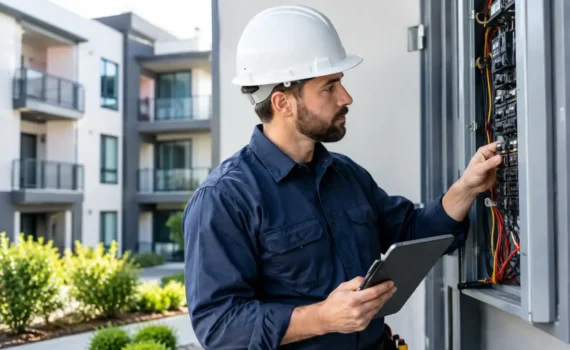
Not every electrical item carries the same level of risk. Prioritize systems that protect people, keep a building open, or serve high-use areas. Electrical panels and circuit breakers should be accessible, properly labeled, and free of signs of overheating such as discoloration, unusual odor, buzzing, or repeated tripping. Panel covers should stay secured, and storage should not block access.
Common-area and exterior lighting deserve regular attention. Dim walkways, dark stairwells, and poorly lit parking areas affect visibility, security, and customer or tenant confidence. A maintenance visit can identify failed fixtures, damaged poles, photocell problems, timer issues, and lighting that no longer provides enough coverage.
Smoke detectors also need a consistent plan. Property managers should follow the applicable local requirements for testing, replacement, placement, and records. An electrician can address hardwired smoke detector concerns, including units that chirp after battery replacement, fail to communicate with interconnected alarms, or have damaged wiring.
In commercial properties, pay close attention to tenant improvements and equipment changes. A suite that once supported desks and lighting may later add refrigeration, medical equipment, servers, salon stations, or high-demand kitchen equipment. The existing circuits and panel capacity may not match the new load. Addressing that before a move-in or renovation is usually less disruptive than correcting it after breakers begin tripping.
Set a Practical Inspection Schedule
The right schedule depends on the age of the property, occupancy, equipment, and past repair history. A newer, lightly used office building may need less frequent service than a busy retail strip center with exterior lighting, signage, multiple tenant panels, and long operating hours.
For many properties, quarterly visual checks of common areas and exterior lighting are a sensible starting point. This is a good time to look for damaged covers, loose fixtures, water intrusion, exposed wiring, and outlets that no longer hold plugs securely. It also keeps parking-lot lighting problems from lingering until a customer, tenant, or security concern brings them to attention.
A more detailed annual electrical review can cover panel condition, breaker performance, GFCI-protected receptacles in appropriate locations, lighting controls, surge protection, and known problem circuits. After major storms, flooding, roof leaks, or construction work, schedule an additional inspection where electrical equipment may have been affected.
Avoid treating the calendar as a substitute for judgment. If tenants report warmth at an outlet, shocks or tingling, burning smells, frequent flickering, or breakers that will not reset, that is not a wait-until-the-next-inspection issue. Turn off power to the affected area if it is safe to do so, keep people away from the equipment, and arrange qualified electrical service promptly.
Keep Repair Records That Help You Make Better Decisions
A short, consistent work history can save substantial time and expense. Record the date, location, reported symptom, repair performed, parts used, and whether the issue is likely to return. Include photos when they clarify damaged fixtures, water intrusion, panel labeling, or parking-lot lighting conditions.
Over time, this record reveals where planned upgrades make better financial sense than repeat service calls. A property with aging fluorescent fixtures may have ongoing ballast and lamp failures. An LED retrofit can reduce those maintenance calls while improving light quality and lowering energy use. The best choice depends on the fixture condition, operating hours, available budget, and how long the owner expects to keep the property.
The same cost-versus-reliability decision applies to electrical panels. A panel upgrade is not automatically necessary because a building is older. But limited capacity, outdated equipment, damaged bus bars, frequent overloads, or a planned expansion can make an upgrade the safer and more practical option. A licensed electrician can evaluate the actual condition and recommend a scope based on the property rather than guesswork.
Plan for Tenant Access and Emergency Response
Maintenance is easier when tenants know what to expect. Provide reasonable notice for planned work, explain whether power will be interrupted, and give a realistic time window. For retail and office tenants, coordinate repairs around business hours when possible. A well-planned shutdown for panel work is often far less costly than an unexpected outage during a busy period.
Your emergency process should also be clear before a problem occurs. Staff should know who can authorize electrical repairs, where electrical panels are located, how to report an outage, and when to call emergency services. Electrical work should not be assigned to maintenance staff who are not qualified for the task. Resetting a breaker without understanding why it tripped can mask a serious problem and create repeated disruption.
For occupied residential properties, have a plan for reported hazards after hours. A sparking outlet, damaged service equipment, smoke from electrical components, or downed electrical lines requires immediate action. Keep tenants away from the area and contact the appropriate emergency resource. For non-emergency repairs, prompt communication still matters. Tenants are more likely to report concerns early when they trust that someone will respond.
Use Upgrades to Reduce Future Maintenance Calls
Some electrical improvements directly support easier property management. Whole-building or panel-level surge protection can help protect sensitive electronics and appliances from voltage spikes. Outdoor video camera wiring and improved exterior lighting can support security plans. Dedicated circuits and professionally installed EV charging equipment may be worthwhile amenities where tenant demand and electrical capacity support them.
Generator inlet boxes and transfer-switch-related electrical work can also be useful for properties that need to keep selected equipment operating during outages. The right setup depends on what must remain powered, whether a generator is portable or permanent, and the property’s existing electrical service. Planning this work in advance is safer than trying to create a temporary power solution after a storm.
For properties in Katy and the greater Houston area, storm exposure, heat, and heavy rain make prompt electrical attention especially valuable. Beekman Electric provides free estimates for repairs, lighting upgrades, panel work, parking-lot lighting, and other property electrical needs. A clean, documented repair today can prevent a frustrated tenant call and a more expensive problem tomorrow.
A dependable property does not require perfect equipment. It requires a manager who notices patterns, responds to safety concerns, and schedules qualified help before a minor electrical issue becomes a disruption for everyone in the building.