



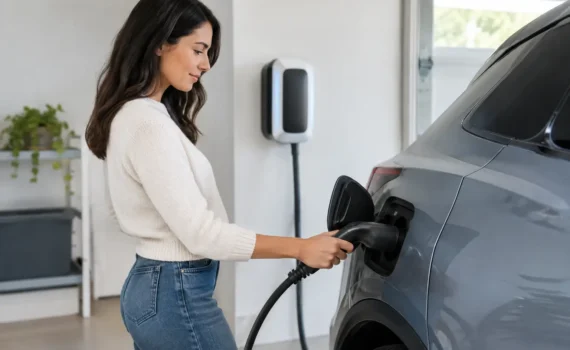
A garage is where most homeowners expect to charge an electric vehicle, so it is reasonable to ask: are EV chargers safe indoors? Yes, an EV charging station can be safely installed and used indoors when the equipment is properly rated, the circuit is correctly designed, and the installation is completed to current electrical requirements. The bigger concern is not the indoor location itself. It is an overloaded circuit, loose connection, damaged cord, or shortcut installation.
For homeowners in Katy and the greater Houston area, a professionally installed garage charger is often one of the safest and most convenient ways to charge an EV. It keeps the connector protected from weather, puts charging where the vehicle is parked, and avoids relying on extension cords or questionable outlet adapters.
Are EV Chargers Safe Indoors in a Garage?
An EV charging station is designed to deliver power for hours at a time. That is very different from plugging in a phone charger or running a small appliance for a few minutes. A typical Level 2 unit may supply 240-volt power for several hours overnight, which is why the circuit, wiring, breaker, and connection points all matter.
When installed correctly, an indoor EV charger does not create exhaust fumes, fuel vapors, or normal combustion risks. The vehicle is electric, and the charging equipment is built to communicate with the vehicle and stop or reduce charging when a fault is detected. Many units also include ground-fault protection and temperature monitoring.
Still, “safe” does not mean “install it anywhere and plug it into anything.” A garage charger should have a dedicated circuit sized for the charger’s continuous electrical load. The electrical panel must have enough available capacity, and the charger should be mounted where the cord can reach the vehicle without becoming a trip hazard, getting pinched by the garage door, or crossing a walkway.
The Indoor Risks That Need Attention
Most EV charging problems are caused by installation conditions, not by the fact that charging happens inside. Heat is the main warning sign to take seriously. Electrical resistance at a loose terminal, worn receptacle, undersized wire, or poor-quality adapter can create heat over time. Because EV charging is a sustained load, a weakness that might go unnoticed with a temporary appliance can become more serious during overnight charging.
A properly selected hardwired charger eliminates one possible failure point: the receptacle and plug connection. Plug-in chargers can also be safe, especially with a quality receptacle installed for EV use, but they need the right outlet, correct wiring, and a firm connection. An older dryer outlet is not automatically suitable for a vehicle charger.
The location matters as well. Keep the charging unit and cord away from standing water, chemicals, fuel containers, paint thinners, and other flammable materials commonly stored in garages. Do not hang the charging cable over sharp edges or allow it to be driven over. If the cable jacket is cracked, crushed, or damaged, stop using it until it has been inspected or replaced.
An EV itself does not produce carbon monoxide while charging. However, a garage can still be dangerous if a gasoline-powered vehicle, generator, or other fuel-burning equipment is running nearby. Never use a generator inside a garage, and do not leave any gas-powered vehicle idling in an enclosed space.
What a Safe EV Charger Installation Includes
A safe installation starts before anyone mounts the charger on the wall. A licensed electrician should assess the home’s existing electrical service and panel. Some newer homes have room for an EV circuit, while older homes may need a panel upgrade, load-management equipment, or a different charging plan.
The charger’s amperage determines the circuit requirements. For example, a charger set to deliver 32 amps continuously requires more than a 32-amp circuit because continuous loads need additional capacity. The correct breaker size, wire size, disconnecting method when required, and equipment settings all need to match the manufacturer’s instructions and applicable code.
A complete installation typically includes:
- A dedicated circuit for the EV charging equipment
- Wiring sized for the charging load and installation conditions
- A properly rated breaker and electrical connections tightened to specification
- A charger mounted securely at a practical height and location
- Protection and receptacle requirements appropriate to the equipment and local code
- Testing before regular use
Permits and inspections may also apply depending on the city and project scope. Those steps are not just paperwork. They help confirm that the electrical system can safely support the added load and that concealed wiring has been installed correctly.
Hardwired vs. Plug-In Chargers Indoors
Both options can work well in a garage, but they are not identical.
A hardwired Level 2 charger is directly connected to the branch circuit. It is a clean option for homeowners who know where they want to park and charge. It avoids repeated plugging and unplugging, can support higher charging speeds in some setups, and removes the receptacle as a potential heat point. If you are installing a charger specifically for your EV, hardwiring is often the most durable long-term choice.
A plug-in charger uses a 240-volt receptacle, commonly a 14-50 style outlet. This can offer flexibility if you may take the charger with you or replace it later. But the outlet must be high quality, correctly installed, and intended for the charging duty it will handle. Do not assume a standard-looking receptacle is adequate simply because the plug fits.
The best choice depends on your vehicle, charger, electrical panel, future plans, and how often you drive. A homeowner who charges overnight a few times a week may have different needs than a family with two EVs or a business charging fleet vehicles during the day.
Do Not Use Extension Cords or Improvised Adapters
An extension cord is one of the clearest signs that a charging setup needs to change. Even a heavy-looking extension cord may not be rated for the sustained load, connection quality, and heat conditions involved in EV charging. Coiled cords can trap heat, and outdoor cords running into a garage can be damaged by doors, tires, moisture, and foot traffic.
The same caution applies to adapters made to connect an EV charger to a dryer outlet or another existing 240-volt receptacle. The outlet may have a different wiring configuration, may not be rated for continuous use, or may serve equipment that needs to remain available. A plug that fits does not prove the circuit is correct or safe.
If your charger will not reach the vehicle, the answer is usually to relocate the charger, install a suitable receptacle, or revise the parking arrangement. It is not to add more cord between the charger and the electrical system.
Signs You Should Stop Charging and Call an Electrician
Turn off the charger and have the setup checked if you notice a hot outlet, plug, breaker, or charging cable. A faint smell of melting plastic, discoloration around a receptacle, buzzing, repeated breaker trips, error messages that return after resetting, or charging that starts and stops unpredictably also deserves prompt attention.
Do not keep resetting a breaker to make charging continue. A breaker that trips is responding to a condition that needs to be identified. It could be a circuit overload, loose connection, equipment fault, or a problem elsewhere in the electrical system.
Homeowners should also schedule an evaluation before adding an EV charger if the panel is already full, lights dim when major appliances start, breakers trip regularly, or the home has an older service. These do not automatically mean you cannot charge an EV at home. They mean the installation needs planning rather than guesswork.
Indoor EV Charging for Multi-Car and Commercial Properties
Charging needs grow quickly when more than one vehicle is involved. Two Level 2 chargers on the same property can place a significant demand on the electrical service, especially when air conditioning, electric cooking, pool equipment, or other major loads are operating. Load-sharing chargers or managed charging systems may be a practical solution, but they still need to be designed and installed correctly.
For apartment properties, offices, retail locations, and fleet areas, the charging equipment must also be protected from vehicle impact, accessible to users, and supported by electrical infrastructure that can handle expected demand. A safe indoor charging plan considers the entire building, not just the wall where the charger will be mounted.
Beekman Electric can evaluate your panel capacity, charging location, and equipment needs before installation, then provide a clear estimate for a properly installed home or business EV charger.
A charger in the garage should make owning an EV easier, not give you another electrical concern to watch overnight. If the equipment is correctly matched to your electrical system and installed by a qualified professional, indoor charging can be a reliable part of your daily routine.