



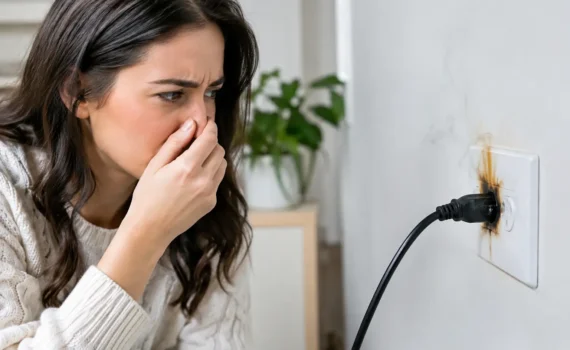
A burning odor near an outlet, light switch, electrical panel, or appliance is not a smell to “wait and see” about. What causes electrical burning smells is usually heat where heat does not belong: a loose connection, overloaded circuit, damaged wire, or failing electrical component. The source may be small, but it can worsen quickly if electricity continues flowing through it.
If you smell burning plastic, hot rubber, fishy odors, or a sharp smoky smell, stop using the affected device or circuit. Keep people away from the area, and call a licensed electrician promptly. If you see smoke, sparks, flames, or a hot panel, get out of the building and call 911.
What Causes Electrical Burning Smells?
Electrical burning smells happen when wiring, insulation, plastic parts, or electrical connections overheat. In a properly operating electrical system, wires and devices stay within safe temperature limits. When a connection becomes loose or a circuit carries more current than it should, resistance creates heat. That heat can damage surrounding materials and create the odor you notice.
The smell may be strongest at one outlet or switch, but the actual problem can be behind the wall, inside a junction box, at the panel, or in the appliance plugged into that location. That is why a quick visual check is useful, but it is not a substitute for a professional diagnosis.
Loose or damaged wiring connections
Loose electrical connections are a common cause of overheating. A wire that is not secured properly at an outlet, switch, light fixture, breaker, or junction box creates resistance as current passes through. The connection can heat up enough to discolor the device, melt insulation, or scorch the electrical box.
This issue is more likely in older homes, heavily used outlets, and areas where previous electrical work was not completed correctly. You may also notice a buzzing sound, flickering lights, a warm wall plate, or a receptacle that feels loose when you plug something in. Do not keep using that outlet just because it still provides power.
Overloaded outlets and circuits
Power strips and extension cords make it easy to plug several devices into one location. The problem starts when high-demand equipment shares a circuit beyond what it can safely handle. Space heaters, portable air conditioners, hair tools, microwaves, coffee makers, and shop equipment can all draw significant power.
An overloaded circuit may trip a breaker, but not every overload produces an immediate trip. A worn outlet, undersized extension cord, or poor connection can overheat first. If the burning smell appears while several devices are running, turn them off and unplug them if it is safe to do so. Avoid resetting a tripped breaker repeatedly without finding out why it tripped.
Failing outlets, switches, and dimmers
Outlets and switches wear out. Internal contacts can loosen, crack, corrode, or fail after years of regular use. Dimmers can also produce a faint warmth during normal operation, especially with certain lighting loads, but they should not smell like burning plastic or feel excessively hot.
Signs of a failing device include discoloration, cracking, arcing marks, popping noises, intermittent power, or a plug that will not stay firmly in the outlet. A warm outlet can be caused by the plug-in equipment, the receptacle itself, or wiring behind it. A licensed electrician can test the circuit and replace the damaged component without overlooking the cause.
Overheating light fixtures or incorrect bulbs
A burning smell around a light fixture may come from a bulb with too high a wattage rating, incompatible LED and dimmer components, failing ballasts, or damaged fixture wiring. Older recessed lights are especially worth checking because insulation, dust, or heat buildup in the ceiling can make fixture problems more serious.
Always follow the fixture’s maximum bulb rating. If a fixture smells hot, flickers, turns off unexpectedly, or has a yellowed or brittle socket, switch it off at the breaker and have it inspected. Replacing the bulb alone may not solve a wiring or fixture issue.
Electrical panel or breaker problems
A burning odor near the electrical panel deserves immediate attention. Breakers, bus bars, and wiring connections inside a panel can overheat due to loose lugs, corrosion, overloaded circuits, water intrusion, or defective equipment. You may notice a warm panel cover, buzzing, frequent breaker trips, or a smell that becomes stronger when large appliances run.
Do not remove the panel cover or touch breakers that appear damaged. A breaker is a safety device, but it is not designed to compensate for every wiring defect or overloaded connection. Panel repairs and upgrades should be handled by a qualified electrician who can safely identify the source and recommend the right repair.
Appliances, chargers, and extension cords
Sometimes the building wiring is fine and the smell comes from a plugged-in item. A damaged phone charger, appliance cord, power strip, EV charging accessory, or extension cord can overheat internally. Check for melted plastic, frayed insulation, bent prongs, dark marks, or a plug that feels hot.
Unplug the item by gripping the plug, not pulling the cord, if it is safe to do so. Do not use a damaged cord again or cover it with tape as a permanent fix. For larger equipment that is hardwired or connected to a dedicated circuit, such as an HVAC component or built-in appliance, turn off the breaker and arrange service.
What to Do When You Smell Electrical Burning
The right response depends on how severe the warning signs are, but speed matters. Take these steps without trying to troubleshoot live electrical equipment:
- Turn off and unplug the suspected appliance or device if there is no smoke, sparking, or immediate danger.
- Shut off the affected breaker if you can clearly identify it and reach the panel safely.
- Keep water away from electrical equipment. Never use water on an electrical fire.
- Do not use the outlet, switch, fixture, or circuit again until it has been checked.
- Call 911 if there is smoke, fire, visible arcing, or a strong odor that continues after power is shut off.
A fire extinguisher rated for electrical fires can be appropriate for a very small, contained electrical fire, but personal safety comes first. If there is any doubt, leave the building and let emergency responders handle it.
When a Burning Smell May Not Be Electrical
Not every burnt smell is caused by wiring. Dust can burn off when a heater, furnace, or rarely used light fixture runs for the first time in months. New appliances can also have a brief manufacturing odor during initial use. Those smells should be mild, short-lived, and should not come with heat at an outlet, flickering lights, breaker trips, or discoloration.
It depends on the source and timing. A brief dust smell from a heating system may be normal, while a persistent plastic or fishy odor near a switch is not. If you cannot confidently identify a harmless cause, treat the situation as an electrical concern.
Get the Problem Checked Before It Spreads
Electrical odors often appear before visible damage does. Addressing them early can mean replacing one outlet, repairing a loose connection, or correcting an overloaded circuit instead of dealing with damaged wiring and a larger safety issue.
For homeowners and businesses in Katy and West Houston, Beekman Electric can inspect the source, explain the repair clearly, and provide a free estimate. Turn the affected circuit off, leave it off, and have a licensed electrician find the cause before that smell becomes a more dangerous problem.