



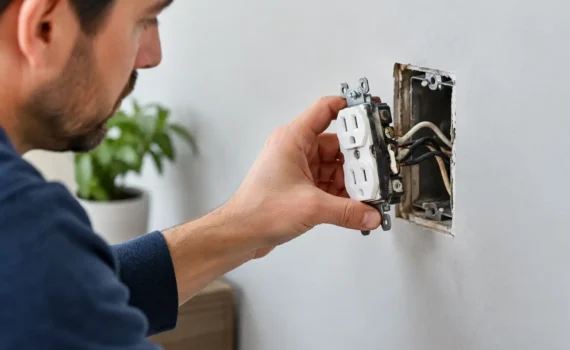
A loose outlet behind the coffee maker may seem like a minor annoyance. But if a plug falls out, the cover is cracked, or the outlet feels warm after use, it is time to take the problem seriously. Knowing when to replace damaged outlets can help prevent shock hazards, damaged electronics, and electrical fires before they become an expensive emergency.
An outlet is a small part of a much larger electrical system. The visible receptacle, cover plate, wiring connections, electrical box, circuit breaker, and grounding all need to work together safely. A professional inspection identifies whether the outlet itself is the issue or whether a deeper wiring or circuit problem needs attention.
Signs You Should Replace Damaged Outlets
Some outlet damage is easy to spot, while other warning signs show up only when you use an appliance. Never keep using an outlet that appears damaged just because it still provides power. Electrical connections can fail gradually, and heat buildup behind the wall is not always visible.
Watch for these common signs:
- A plug fits loosely, slips out, or only works when held at a certain angle.
- The outlet, faceplate, or plug feels warm, looks discolored, or has scorch marks.
- You hear buzzing, crackling, or popping when plugging something in.
- The outlet has cracks, broken slots, exposed parts, or a damaged cover plate.
- An appliance repeatedly loses power, trips the breaker, or causes a burning smell at that location.
A loose plug is more than an inconvenience. Worn internal contacts may not hold the plug blades firmly, creating resistance and heat. Heat is one of the most concerning signs because it can damage insulation and connections inside the wall.
Burn marks, melted plastic, and a burning odor require immediate action. Stop using the outlet, unplug devices if it is safe to do so, and turn off the affected circuit at the electrical panel when you can identify it safely. Call a licensed electrician promptly. Do not cover scorch marks with a new faceplate or assume the issue is limited to the receptacle.
Why Outlets Become Damaged
Outlets wear out through normal use. In busy kitchens, living rooms, offices, and commercial spaces, repeated plugging and unplugging can weaken the internal spring contacts over time. Older outlets may also lack the safety features expected in newer homes and updated electrical systems.
Damage can also result from overloaded power strips, high-demand appliances, loose wiring connections, moisture exposure, impact damage, or improper installation. In older Houston-area properties, an electrician may find aging wiring, ungrounded outlets, or electrical boxes that no longer provide a secure mounting point.
The cause matters. Replacing a worn receptacle may solve a straightforward problem. However, replacing an outlet without checking the wiring can leave the real issue behind the wall. If a connection has overheated, a breaker is incorrectly sized, or the circuit is overloaded, the new outlet may develop the same symptoms.
When an Outlet Repair Is Not Enough
A cracked cover plate can often be replaced quickly, but a loose outlet body or damaged wiring connection requires more attention. If the outlet moves when you insert a plug, the electrical box, mounting screws, or wiring may need repair. A properly installed outlet should sit firmly against the wall and should not shift during normal use.
Sometimes an outlet stops working because a GFCI outlet has tripped elsewhere in the home. This is common in kitchens, bathrooms, garages, laundry areas, and outdoor locations. A licensed electrician can determine whether the issue is a tripped protective device, a failed receptacle, a wiring fault, or a circuit issue.
GFCI protection is especially important where water is present. These outlets are designed to shut off power quickly when they detect an imbalance that could indicate electricity traveling through an unintended path. If a GFCI outlet will not reset, repeatedly trips, or shows signs of damage, it should be evaluated rather than bypassed.
Modern tamper-resistant outlets are another worthwhile upgrade for households with children. Internal shutters help block foreign objects from entering the slots while still allowing a plug to be inserted normally. For outdoor areas, garages, and patios, weather-resistant outlets with appropriate in-use covers can provide better protection from moisture and changing Texas weather.
Do Not Ignore Heat, Sparks, or Repeated Breaker Trips
A tiny, brief spark can sometimes occur when a plug is inserted into an energized outlet, particularly with devices that are already switched on. That does not make frequent sparking normal. A large spark, a spark accompanied by a pop, or any spark paired with heat, odor, or discoloration should be treated as a warning sign.
Repeated breaker trips need the same attention. The breaker is doing its job by shutting off power when it detects an overload or fault. Resetting it over and over without addressing the cause can place unnecessary stress on the circuit and hide a developing problem.
High-demand equipment deserves special consideration. Space heaters, hair dryers, microwaves, refrigerators, power tools, window air conditioners, and commercial equipment can draw substantial power. If an outlet is asked to supply more than the circuit can safely handle, the right solution may be a dedicated circuit, circuit repair, or panel evaluation rather than another replacement outlet.
Why Professional Outlet Replacement Makes Sense
Replacing an electrical outlet looks simple from the outside, but safe work depends on more than matching wires to terminals. An electrician checks for proper grounding, correct polarity, secure connections, box condition, wire damage, circuit capacity, and code-appropriate protection. The work should also be tested after installation.
This is particularly valuable when outlets are old, damaged by heat, located near water, connected to aluminum wiring, or part of a commercial property. Commercial outlets may serve equipment with more demanding electrical loads, and an interruption can affect employees, customers, operations, or inventory.
Professional service also keeps the job focused. Instead of guessing whether a bad outlet is the source of the issue, you receive a clear explanation of what was found and what repair is recommended. If the repair is limited to one damaged receptacle, that should be clear. If the outlet reveals a larger circuit concern, you can make an informed decision before the problem grows.
What to Expect From an Outlet Service Visit
A qualified electrician begins by asking what you have noticed: loose plugs, intermittent power, tripped breakers, heat, odor, or damage after a storm or appliance failure. They inspect the outlet and test the circuit as needed to locate the cause.
Once the issue is identified, the technician can recommend the right type of replacement or repair. That may include a standard receptacle, GFCI outlet, tamper-resistant outlet, weather-resistant outlet, new cover plate, box repair, wiring repair, or a circuit upgrade. The best option depends on the room, the electrical load, the age of the system, and the condition of the wiring.
For homeowners and property managers, clean workmanship matters too. Outlet repairs should leave the wall, cover plate, and work area neat while restoring safe, dependable power where it is needed.
If an outlet is loose, hot, cracked, discolored, or unreliable, do not wait for it to fail completely. Beekman Electric provides prompt local electrical repairs and FREE estimates for homeowners and businesses in Katy and surrounding West Houston communities. Give us a call today to have a licensed electrician inspect the problem and help you get back to safe, dependable power.