



A tripped breaker can shut down a register, refrigeration equipment, office computers, exterior lighting, or an entire tenant space. This commercial circuit breaker repair guide helps business owners and facility managers recognize what a breaker issue may mean, take safe first steps, and know when it is time to schedule a licensed electrician.
A circuit breaker is designed to stop electrical flow when it detects an overload, short circuit, or ground fault. The breaker is doing its job when it trips, but a breaker that trips repeatedly is not a nuisance to ignore. It is a warning that the circuit, connected equipment, wiring, or electrical panel needs attention.
Start With Safety, Not a Quick Reset
When a breaker trips, turn off or unplug equipment on the affected circuit before touching the panel. Look for obvious signs of trouble around the equipment and electrical panel, including a burning smell, buzzing, heat, discoloration, melted plastic, or water nearby. If you see any of these conditions, do not reset the breaker. Keep people away from the area and call a licensed commercial electrician.
If there are no visible warning signs, identify the breaker that has moved to the middle or OFF position. Move it firmly all the way to OFF first, then back to ON. A breaker that stays on after one reset may have tripped because of a temporary overload. A breaker that immediately trips again needs professional diagnosis.
Avoid the common temptation to keep resetting the breaker. Repeated resets can allow an electrical fault to continue heating conductors or equipment. It can also turn a manageable repair into a larger outage.
Common Reasons Commercial Breakers Trip
The cause matters more than the tripped breaker itself. Commercial properties often have heavier electrical demands than homes, and even a small change in operations can overload an existing circuit.
Circuit Overload
An overload occurs when the connected equipment draws more current than the circuit is designed to carry. This can happen when a break room adds a microwave, coffee maker, toaster oven, and refrigerator to one circuit. It can also happen in retail, restaurant, warehouse, and office settings when new equipment is added without evaluating available electrical capacity.
A breaker that trips only during busy hours or when several devices operate together may be responding to an overload. The right repair may involve moving equipment to other circuits, installing a dedicated circuit, or upgrading panel capacity. Simply installing a larger breaker is not a safe fix unless the wiring and circuit design support it.
Short Circuit or Ground Fault
A short circuit occurs when energized wiring contacts another conductor or a grounded metal surface. A ground fault occurs when electricity takes an unintended path to ground. Both conditions can trip a breaker quickly and may be caused by damaged cords, failing equipment, moisture, rodents, loose connections, or deteriorated wiring.
These faults are especially important to address in kitchens, restrooms, exterior areas, mechanical rooms, and locations exposed to water or weather. If a breaker trips as soon as a specific appliance, sign, light fixture, or piece of machinery is switched on, leave that equipment off until it can be inspected.
Failing Breaker or Electrical Panel Issue
Circuit breakers can wear out. Age, heat, corrosion, loose terminals, and frequent tripping can affect performance. A failing breaker may feel hot, fail to stay reset, make a buzzing sound, or show visible damage. In some cases, the breaker is not the root problem. The issue may be a loose panel connection, overloaded bus bar, damaged feeder, or an electrical panel that no longer matches the building’s needs.
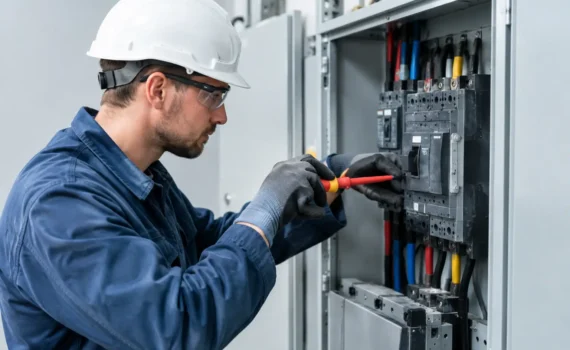
Commercial panel work requires the right testing equipment and training. The panel may contain energized components even when a main breaker is off, so internal panel repairs should be left to a qualified electrician.
Commercial Circuit Breaker Repair Guide: What to Document
Clear information helps an electrician find the problem faster and can reduce business disruption. Before service arrives, record which breaker tripped, what part of the building lost power, and what equipment was running at the time.
Take note of whether the outage happened after a storm, during peak production, after new equipment was installed, or when lights or HVAC systems turned on. If the breaker label is missing or inaccurate, mention that too. Poor panel labeling slows down troubleshooting and makes future outages harder to manage.
Do not remove the panel cover to inspect wiring, tighten connections, or replace a breaker. Those tasks involve exposure to live electrical parts and should be completed by a licensed professional. Your team can help by keeping the affected area accessible and by letting the electrician know about any critical equipment that must remain powered.
When a Reset Is Reasonable and When It Is Not
A single trip after an obvious temporary overload may be resolved by reducing the electrical load and resetting the breaker once. For example, a circuit may trip if portable heaters, cleaning equipment, and office devices were all used at the same time.
Call for service instead of resetting repeatedly when any of these conditions apply:
- The breaker trips again immediately or trips often.
- The panel, breaker, outlet, switch, or equipment feels warm or smells burnt.
- You hear buzzing, crackling, or popping near electrical equipment.
- Lights flicker, dim, or brighten unexpectedly.
- Water has entered the panel, electrical room, or connected equipment.
- A breaker will not reset, will not stay on, or appears physically damaged.
An outage affecting life-safety systems, emergency lighting, fire alarm components, refrigeration, medical equipment, security systems, or essential business operations should be treated as a priority. Do not bypass a breaker or use extension cords as a long-term workaround for a failed circuit.
What a Licensed Electrician Checks
Commercial breaker repair is usually a troubleshooting process, not just a breaker swap. A qualified electrician will evaluate the circuit load, inspect the breaker and panel condition, test for loose or damaged connections, and isolate the source of a short or ground fault when needed.
The recommended repair depends on the findings. It may be as straightforward as replacing a worn breaker or repairing a damaged receptacle. Other situations call for a dedicated circuit, replacement wiring, panel repair, a subpanel, load balancing, or an electrical service upgrade.
The best solution should fit the actual demand of your property. A restaurant kitchen, office suite, retail space, warehouse, and medical office all use power differently. A repair that stops today’s trip but leaves the circuit near capacity may not be the best value if equipment use is expected to grow.
Reduce Future Breaker Problems
Preventive attention can keep a small electrical issue from interrupting business. Keep electrical panels accessible, dry, and clearly labeled. Avoid storing supplies directly in front of panel doors. Replace damaged cords and avoid daisy-chaining power strips, especially in offices and work areas where added devices tend to accumulate over time.
When adding HVAC equipment, commercial kitchen appliances, LED lighting, signage, computers, EV charging, or machinery, have the electrical load evaluated first. New equipment may need dedicated circuits even if there appears to be an unused outlet nearby.
For older commercial spaces, an electrical inspection can also identify loose connections, outdated equipment, improper modifications, and circuits that no longer meet the way the space is used. This is particularly helpful after a tenant change, remodel, or expansion.
For commercial properties in Katy and the West Houston area, Beekman Electric provides prompt, professional troubleshooting for circuit breaker, panel, lighting, and electrical repair concerns. A clear estimate and an experienced on-site evaluation give you a safer path forward than guessing at the cause of repeated breaker trips.
A breaker that trips once may be a temporary interruption. A breaker that keeps tripping is your building asking for attention – schedule qualified service before it becomes a longer, more expensive shutdown.