



When the power goes out, the difference between generator inlet versus extension cords becomes very real. One option can leave cords running through doorways and limit you to a few appliances. The other can supply selected home circuits through a properly installed transfer switch or panel interlock. Both have a place, but they are not interchangeable.
For Katy and Houston-area homeowners, the right choice usually comes down to how often outages happen, what you need to keep running, and how much convenience and safety matter when the weather is already stressful.
Generator Inlet Versus Extension Cords: The Core Difference
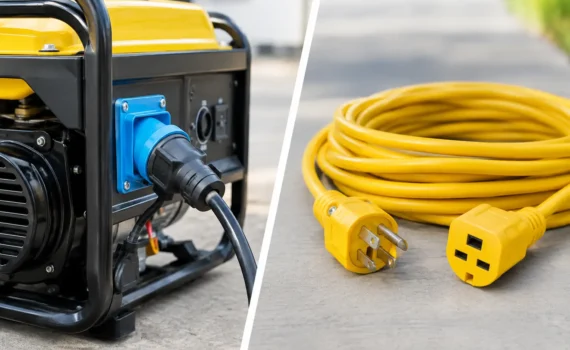
Extension cords connect individual appliances directly to a portable generator. You place the generator outdoors, then run heavy-duty, outdoor-rated cords to a refrigerator, freezer, lamp, phone charger, window AC unit, or other essential load. It is the simplest way to use a portable generator because it does not connect to the home’s electrical system.
A generator inlet is a weather-resistant connection installed on the exterior of the home. A generator cord connects the portable generator to that inlet. Inside, a transfer switch or properly listed panel interlock allows the generator to power selected circuits while preventing electricity from feeding back into utility lines.
That safety separation is the main point. A generator inlet is not a stand-alone replacement for a transfer switch or interlock. The inlet, approved switching equipment, correct breaker arrangement, and professional installation work together as one backup-power system.
Extension Cords: A Practical Option for Short Outages
Extension cords make sense for limited, occasional use. If your goal is to keep food cold, charge devices, run a few lights, and perhaps power a small fan, a portable generator and correctly sized cords can be a reasonable plan.
The benefit is a lower upfront cost. There is no electrical installation required, and you decide exactly which appliances to connect. This approach can also work well for renters or homeowners who only need temporary power for a few loads.
The limitations show up quickly during a longer outage. You may need to move cords through a partially open door or window, which can let in heat, humidity, rain, or insects. Cords across walkways create trip hazards. You also have to unplug and reconnect appliances manually, sometimes in the dark or during severe weather.
Cord size matters. A thin household extension cord can overheat when used with a refrigerator, sump pump, space heater, or window air conditioner. Generator cords should be outdoor-rated, grounded, in good condition, and sized for the appliance load and cord length. Longer cords have more voltage drop, which can affect motor-driven equipment.
Never use damaged cords, run cords under rugs, pinch them in doors or windows, or connect one extension cord to another to reach farther. Those shortcuts create heat and fire risks at exactly the wrong time.
Why a Generator Inlet Is Better for Whole-Home Convenience
A generator inlet gives you a cleaner way to use portable backup power. Instead of bringing several cords into the house, you connect one generator cord to the exterior inlet and energize the circuits selected for backup power.
That might include the refrigerator, kitchen outlets, a few lights, internet equipment, garage door opener, furnace blower, or a properly planned window AC circuit. The exact circuits depend on the generator’s wattage, the home’s panel layout, and which loads your household needs most.
A professionally designed setup is especially useful for families who want less guesswork during an outage. You do not have to decide whether to unplug the freezer so you can charge phones. You can operate the circuits that were chosen ahead of time, while managing larger loads so the generator is not overloaded.
An inlet setup also keeps the generator connection outside, where it belongs. Portable generators must run outdoors in a dry, well-ventilated area, away from doors, windows, and vents. Carbon monoxide can enter a home quickly and is odorless. Use working carbon monoxide alarms inside the home and follow the generator manufacturer’s placement instructions.
Safety Is the Deciding Factor for Many Homes
The biggest risk with an improper generator connection is backfeeding. This happens when someone tries to power the home by plugging a generator into a wall outlet, sometimes called a suicide cord method. It can energize utility lines, endanger lineworkers, damage electrical equipment, and create a serious fire and shock hazard.
Do not connect a generator to a dryer outlet, range outlet, or regular receptacle. Do not rely on turning off the main breaker as a substitute for listed transfer equipment. A proper transfer switch or panel interlock is designed to prevent the utility supply and generator supply from being connected at the same time.
An electrician also evaluates generator capacity, breaker sizing, grounding requirements, inlet amperage, and the condition and available space in your electrical panel. These details are easy to overlook, but they determine whether the system performs safely when you need it.
Capacity: What Do You Actually Need to Run?
Extension cords are best when the load is simple and visible. You can look at the generator’s available wattage and connect a refrigerator, a few lights, and charging equipment without trying to energize half the house.
A generator inlet setup requires more planning because circuits can include equipment that cycles on unexpectedly. A refrigerator compressor, furnace blower, well pump, or air conditioner may need more power to start than it uses while running. If several loads start at once, a generator can overload even if the running wattage seemed acceptable.
This does not mean every home needs a large standby generator. Many homes do well with a portable generator connected to a carefully selected set of essential circuits. The key is choosing circuits that fit the generator and creating a simple operating plan for the household.
High-demand equipment usually needs special consideration. Central air conditioning, electric water heaters, electric ranges, dryers, pool equipment, and EV chargers can exceed the capacity of many portable generators. A qualified electrician can help identify what is realistic for your equipment instead of making assumptions based on a generator’s headline wattage.
Cost and Installation Trade-Offs
Extension cords cost less at the beginning, especially if you already own a portable generator. However, the lower price comes with more setup time, more limitations, and a greater chance of using the wrong cord or creating an unsafe path into the home.
A generator inlet, transfer switch, or panel interlock is an investment in convenience and controlled operation. Installation cost varies with the panel location, electrical capacity, number of circuits, equipment type, permit requirements, and distance to the desired inlet location. It is not a one-price project, which is why an on-site assessment and clear estimate are valuable.
For many homeowners, the best value is not trying to power everything. It is installing a safe connection for the circuits that protect food, comfort, communication, and basic household function during an outage.
Which Option Fits Your Home?
Choose extension cords if outages are rare, you only need a few appliances, and you are comfortable setting up and monitoring each connection. Keep the plan modest, use generator-rated cords, and place the generator safely outdoors.
Consider a generator inlet with transfer equipment if you want a faster outage routine, need multiple essential circuits, dislike cords running through the home, or want a safer long-term backup-power plan. This is often the better fit for homeowners who have experienced extended storm outages and do not want to repeat the same scramble next time.
For homes in West Houston, a licensed electrician can inspect the panel, discuss the loads that matter most, and recommend an approach that matches your generator and budget. Beekman Electric can provide a clear estimate for a generator inlet and transfer-switch-related work.
The best time to plan backup power is when the lights are on. Decide what your family needs, test your generator, and make sure the connection method is ready well before the next storm is on the radar.