



A breaker that trips once after an overloaded outlet strip is doing its job. A breaker that trips repeatedly, feels hot, or will not reset is telling you something different. The question, “when should circuit breakers be replaced?” matters because the breaker is a critical safety device between an electrical fault and the wiring inside your walls.
Circuit breakers do not have a fixed replacement date like a smoke detector battery. Many operate reliably for decades. Still, age, wear, corrosion, loose connections, repeated overloads, and electrical faults can affect how well they perform. The right answer depends on the breaker’s condition, the panel it is installed in, and what is happening on that circuit.
When Should Circuit Breakers Be Replaced?
A licensed electrician should evaluate a breaker when it shows signs that it may not trip correctly, may be damaged, or is no longer appropriate for the circuit it protects. Replacing a breaker simply because it has tripped is not always the solution. A trip can point to too many devices on one circuit, a damaged appliance, a short circuit, or a wiring issue elsewhere.
Replacement becomes more likely when a breaker will not stay reset after the connected loads have been unplugged, trips without an obvious change in use, or has visible physical damage. A qualified electrician can determine whether the breaker is the problem or whether it is responding properly to a problem downstream.
Warning signs that deserve prompt attention
Turn off power to the affected area if you can do so safely, and arrange professional service if you notice any of these conditions:
- The breaker is hot to the touch, smells burnt, makes buzzing or crackling sounds, or shows discoloration.
- It trips often, especially when normal loads such as a refrigerator, microwave, HVAC equipment, or office equipment are operating.
- It will not reset, immediately trips again with loads disconnected, or feels loose in the panel.
- There is moisture, rust, corrosion, pest damage, or water staining in or around the electrical panel.
Heat, odor, and visible burning are more urgent than a routine trip. Do not keep resetting a breaker that is hot or showing signs of damage. Do not remove the panel cover or attempt to replace a breaker yourself. Even with the main breaker off, parts of many panels can remain energized.
A Breaker That Trips Is Not Always a Bad Breaker
Circuit breakers are designed to open when a circuit draws more current than its wiring can safely handle. In many homes, a simple overload is the cause. For example, a space heater, hair dryer, and vacuum may overload the same bedroom or bathroom circuit. In a commercial setting, added workstations, countertop equipment, or seasonal displays can create the same problem.
If the breaker trips only when several high-demand devices run at once, the circuit may need to be redistributed, dedicated, or upgraded. Replacing the existing breaker with a larger one is not a safe shortcut. The breaker size must match the wire size and circuit design. Installing an oversized breaker can allow wiring to overheat before the breaker trips.
A short circuit or ground fault is different. These conditions can cause an immediate trip and may come from a damaged cord, failed appliance, loose wire, moisture, or worn receptacle. The breaker may be working exactly as it should. An electrician can isolate the circuit, inspect connections, and test the equipment before recommending a repair.
Age, Panel Type, and Breaker Condition Matter
There is no rule that every breaker must be replaced after 20 or 30 years. However, older electrical systems should be inspected when you are remodeling, adding major loads, selling a property, or experiencing recurring electrical issues. The breaker may be serviceable, but the panel capacity, grounding, connections, or overall condition may no longer fit the building’s needs.
Some older panel brands and equipment types have known safety concerns or limited replacement options. Identification is not always straightforward from the outside of a panel, and replacement parts must be listed for the specific panel. A breaker that appears to fit physically may not be approved for that equipment.
This is why panel work should not be treated as a one-size-fits-all repair. An electrician checks the panel manufacturer, breaker type, bus condition, wire connections, load demand, and any signs of overheating. Sometimes one correctly matched breaker is all that is needed. Other times, a panel repair or upgrade is the safer long-term choice.
GFCI and AFCI Breakers Need Extra Attention
Modern electrical codes use specialized protection in certain areas. Ground-fault circuit interrupter, or GFCI, protection helps protect people from shock in locations where water is a concern, such as bathrooms, kitchens, garages, outdoors, and some commercial spaces. Arc-fault circuit interrupter, or AFCI, protection is intended to detect dangerous arcing that can occur with damaged wiring or connections.
These breakers may trip for reasons that are not obvious. A nuisance trip is possible, but it should not be assumed. An older appliance, a loose neutral connection, moisture, or wiring damage can trigger the protection. Bypassing the protection, swapping it for a standard breaker, or repeatedly resetting it can remove a valuable safety layer and create a code issue.
If a GFCI or AFCI breaker will not reset, the diagnosis should include the circuit wiring and connected devices, not just the breaker itself. That careful approach helps prevent repeat service calls and protects the property.
What an Electrician Checks Before Replacing a Breaker
A proper diagnosis goes beyond looking at the breaker handle. The electrician will ask when the problem occurs, what was operating at the time, and whether the issue affects outlets, lights, appliances, or a specific piece of equipment. That history often points to an overload, failing device, or intermittent wiring fault.
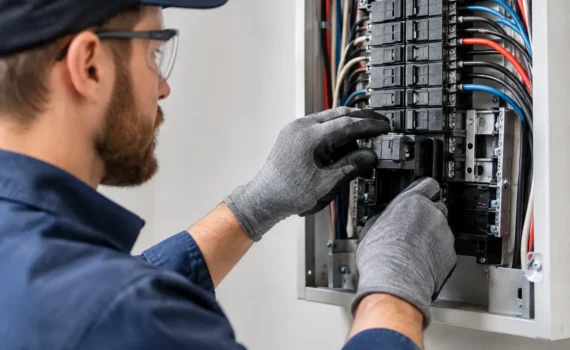
At the panel, they can inspect for loose connections, heat damage, corrosion, improper breaker types, and signs that the electrical load is exceeding the panel’s practical capacity. They may test the circuit, inspect accessible outlets and switches, and verify that the breaker is rated and installed correctly. For a business, the review may also include equipment additions, lighting upgrades, and changes in occupancy that have increased demand.
The goal is to replace a failed breaker when needed without overlooking the condition that caused it to trip. A new breaker cannot correct a damaged appliance cord, overloaded circuit, or loose connection in a junction box.
When a Panel Upgrade May Make More Sense
One bad breaker does not automatically mean you need a new panel. But an upgrade is worth discussing if the panel is crowded, lacks capacity for planned additions, has widespread corrosion or heat damage, or uses equipment with safety concerns. Frequent electrical upgrades can also expose a capacity issue.
For homeowners, common reasons include adding an EV or Tesla charger, central HVAC equipment, a hot tub, an electric range, a generator inlet box, or additional circuits for a remodel. Commercial properties may need more capacity for LED retrofits, kitchen equipment, tenant improvements, exterior lighting, or new office loads.
An upgrade has a higher upfront cost than a single breaker replacement, but it can provide room for future circuits, improve reliability, and bring aging equipment up to current requirements. The best option depends on the existing equipment and your plans for the property.
Do Not Ignore a Repeated Breaker Problem
A circuit breaker is not an inconvenience to work around. If one is repeatedly tripping, hot, damaged, or difficult to reset, treat it as a service issue. Avoid extension-cord workarounds, do not tape a breaker in the on position, and never install a larger breaker to stop trips.
For homeowners and property managers in Katy and West Houston, Beekman Electric can inspect the circuit, explain the cause in plain language, and provide a clear estimate for the appropriate repair. A prompt inspection can turn a frustrating breaker issue into a safe, lasting solution before it becomes a larger electrical problem.