



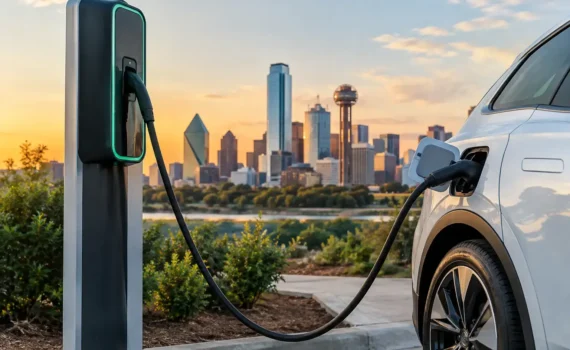
A Level 2 charger can add far more convenience to an EV owner’s routine than a public charging stop ever will. But the charger mounted on the wall is only the visible part of the project. The electrical capacity behind it, the distance from the panel, local permitting requirements, and the way a property may be used five years from now all matter.
EV charging infrastructure trends are moving beyond the question of whether a property needs charging. Homeowners, businesses, apartment owners, and developers are now deciding how much charging capacity to prepare for, how to manage electric demand, and where equipment will make the most sense. For Katy and greater Houston-area property owners, good planning can prevent an expensive rework later.
EV Charging Infrastructure Trends Changing Installations
The biggest shift is simple: EV charging is becoming a standard electrical planning issue, much like adding air conditioning capacity, a generator connection, or outdoor lighting. More drivers expect convenient charging where they live, work, shop, or stay overnight. That expectation is changing the conversation from a single charger installation to long-term electrical readiness.
At home, most drivers benefit from a properly installed Level 2 charger. These units typically operate on a dedicated 240-volt circuit and can charge much faster than a standard household outlet. The exact charging speed depends on the vehicle, charger rating, circuit size, and electrical service available. A larger charger is not automatically the right choice if the home’s panel or service cannot support the added load safely.
For commercial properties, the demand is less predictable. An office may need a few chargers for employees. A retail center may see charging as a customer amenity. A fleet operator may need reliable overnight charging that directly affects daily operations. Each situation calls for a different design, which is why a site assessment should come before equipment is selected.
Panel Capacity Is Getting More Attention
Many homes built before EVs became common were not designed with a high-amperage charging circuit in mind. A house may have a 150-amp or 200-amp service that appears sufficient at first glance, yet existing loads can change the calculation. Electric dryers, ranges, pool equipment, HVAC systems, hot tubs, and electric water heaters all draw power.
A licensed electrician can perform a load calculation to determine whether the current panel and service can support a new EV circuit. Sometimes the answer is yes, with a straightforward dedicated circuit installation. Other times, a panel upgrade, service upgrade, or load-management solution may be the better path. Skipping this evaluation can lead to nuisance breaker trips, overloaded equipment, and safety concerns.
This same issue is growing at commercial sites. A building may have enough power for one or two chargers but not enough for ten. Planning conduit routes, electrical room space, and panel capacity early can make future expansion much more manageable.
Smart Load Management Can Reduce Upgrade Costs
Not every property needs an immediate service upgrade. Smart charging equipment and energy-management systems can monitor electrical demand and reduce or pause charging when a building is approaching its available capacity. When demand drops, charging resumes.
This approach can be practical for homes with limited panel capacity and commercial properties that want to add chargers in phases. The trade-off is charging speed and timing. A driver who needs a full battery by a specific hour may prefer a dedicated circuit with ample available capacity over a system that occasionally slows charging. The right choice depends on driving habits, building loads, and the number of vehicles being charged.
Home Charging Is Becoming More Permanent
Early EV owners often used a basic outlet or treated their charging setup as temporary. That is changing. Homeowners are increasingly treating EV charging as a permanent improvement, particularly when they plan to keep their vehicle or expect another EV in the household.
A professional installation should consider more than the circuit itself. Charger location affects daily convenience, cable reach, garage layout, weather exposure, and vehicle access. Outdoor chargers need equipment rated for the location and a clean installation that protects wiring from physical damage. In a garage, the equipment should be placed where it is accessible without creating a trip hazard or interfering with storage.
There is also a growing interest in preparing for a second EV. Even if only one charger is installed today, running appropriately sized conduit or leaving space in the panel can reduce disruption later. That does not mean every home needs two chargers now. A household with one EV and overnight charging time may be well served by one unit. Preparation is about keeping options open without paying for capacity that will not be used.
Hardwired vs. Plug-In Chargers
Both hardwired and plug-in Level 2 chargers can be appropriate when installed correctly. A hardwired unit can provide a clean, permanent setup and may support higher charging ratings, depending on the equipment and circuit design. A plug-in charger can be easier to replace or move, but it requires the correct receptacle, wiring, and protection.
The decision should not be based on convenience alone. Outlet quality, circuit rating, local code requirements, and the charger manufacturer’s instructions all matter. EV charging is a sustained electrical load, not the same as briefly plugging in a tool. Professional installation helps ensure connections, breaker sizing, grounding, and equipment placement are handled correctly.
Commercial Charging Is Moving Toward Phased Growth
For businesses and property managers, the strongest trend is phased installation. Instead of installing a large bank of chargers immediately, many properties begin with a few charging stations while preparing the electrical infrastructure for future additions.
This can include installing conduit to parking areas, reserving electrical capacity where possible, and planning trenching before landscaping or pavement work is complete. These early steps can be much less costly than cutting concrete and rerouting electrical systems later.
Workplace and multifamily charging require clear operating decisions as well. Who can use the chargers? Will drivers pay for electricity? How will access be managed? Is the goal employee retention, tenant satisfaction, customer traffic, or fleet readiness? The equipment should support the property’s purpose rather than adding technology for its own sake.
For retail properties, charger placement also affects parking flow, visibility, and accessibility. For fleet operations, reliability and charging schedules are often more important than public-facing features. A facility that needs vehicles ready at 6 a.m. needs a different electrical plan than a shopping center offering occasional daytime charging.
Reliability and Safety Still Come First
New charging technology gets attention, but basic electrical workmanship remains the foundation of every successful installation. Chargers should be installed on properly sized dedicated circuits, with equipment selected for the environment and work completed according to applicable codes and manufacturer requirements.
For outdoor or commercial installations, physical protection can be just as important as electrical capacity. Vehicles, weather, standing water, sunlight, and landscape equipment can all affect charger location and longevity. Bollards or other protective measures may be appropriate in busy parking areas. Clear labeling, clean conduit runs, and accessible disconnecting means can make maintenance safer and easier.
Permits and inspections may apply based on the project and local jurisdiction. They are not paperwork to avoid. They provide an additional check that the installation is designed and completed safely. A qualified local electrician can explain what applies to a particular property before work begins.
What Property Owners Should Plan for Now
The practical question is not whether every building needs a full EV charging buildout. It is whether the property is ready for the likely next step. For a homeowner, that may mean installing one Level 2 charger and confirming there is room for future electrical work. For a business, it may mean evaluating service capacity and adding conduit during an upcoming parking lot project.
Start with how the property will actually be used. Consider the number of vehicles, when they will charge, how long they stay parked, and what major electrical loads already exist. Those details shape the right recommendation far better than choosing a charger based only on its advertised speed.
Beekman Electric can assess the electrical side of a home or commercial EV charging project, explain the available options clearly, and provide a free estimate before work begins. A properly planned charger installation gives drivers a dependable place to charge while helping the property stay ready for what comes next.