



A tripped breaker during a busy week is frustrating. A panel that cannot safely support an EV charger, central air, or new equipment is a bigger issue. A service amperage upgrade increases the electrical capacity supplied to your home or business so your system can meet real-world demand without being pushed beyond its limits.
For property owners in Katy and the greater Houston area, this work is often part of a renovation, an EV charger installation, a generator connection, or an effort to correct an aging electrical system. It is not simply a matter of installing a larger breaker. A proper upgrade involves evaluating the full service equipment, calculating the load, obtaining permits when required, and making sure the work meets current code requirements.
What a Service Amperage Upgrade Changes
Your electrical service is the point where power enters the building and is distributed through the main panel to individual circuits. Its amperage rating, commonly 100, 150, 200, or more amps, indicates how much electrical current the service is designed to handle.
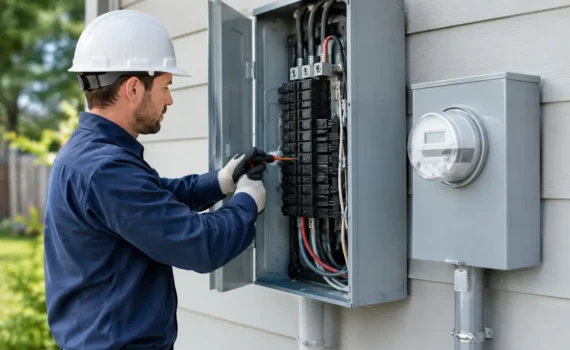
A service amperage upgrade may include a new main electrical panel, meter equipment, service entrance wiring, grounding and bonding updates, and coordination with the utility provider. The exact scope depends on the building, the existing equipment, the calculated electrical load, and local requirements.
A panel replacement and a service upgrade are related but not always the same job. If a panel is old, damaged, overcrowded, or uses obsolete breakers, replacing it may be the right solution. But installing a new panel does not automatically increase the service capacity coming into the property. An electrician should determine whether the incoming service, meter base, and related components can support the planned load.
Signs You May Need a Service Amperage Upgrade
Some electrical issues call for a simple repair. Others point to a system that has outgrown the property. Repeated breaker trips, lights dimming when large appliances start, hot or buzzing panel equipment, and a lack of open breaker spaces all deserve a professional evaluation.
Capacity concerns also come up when you plan to add major electrical loads. An EV or Tesla charger, electric range, heat pump, pool equipment, workshop tools, hot tub, additional HVAC equipment, or a home addition can change the electrical demand significantly. A commercial space may need more capacity after adding machinery, refrigeration, tenant improvements, LED upgrades with new controls, or expanded office equipment.
An older 100-amp service is not automatically unsafe or inadequate. Some homes have modest electrical loads and operate properly with 100 amps. The answer depends on a load calculation, the condition of the existing equipment, and what you expect the property to support now and in the near future. Planning for an upcoming remodel or vehicle purchase can prevent paying for separate electrical work later.
Why Capacity Matters for Safety and Daily Use
Circuit breakers are designed to protect wiring from overcurrent. They are not meant to compensate for an undersized electrical service or a panel packed with improvised additions. If breakers trip repeatedly, turning off the affected circuit may restore power temporarily, but it does not identify the underlying cause.
A correctly designed service helps distribute electrical demand across properly sized circuits. That means less strain when the air conditioner starts, the dryer runs, the kitchen is active, and an EV is charging. It also gives an electrician room to install dedicated circuits correctly instead of relying on extension cords, overloaded power strips, or questionable panel modifications.
For businesses, capacity affects operations as well as safety. A failed main breaker, overloaded panel, or inadequate service can interrupt tenants, customers, equipment, lighting, and point-of-sale systems. Addressing service limitations before they become an outage is usually less disruptive than responding after a failure.
What the Upgrade Process Usually Looks Like
The first step is an on-site assessment. A licensed electrician reviews the main panel, service equipment, visible wiring conditions, existing circuits, and the appliances or equipment you plan to add. The electrician then performs a load calculation to determine the appropriate service size.
If an upgrade is recommended, the scope should be clear before work begins. You should know whether the project includes the panel, meter base, service conductors, grounding upgrades, permits, inspections, utility coordination, and any required drywall or exterior repair. Transparent details help prevent surprises, especially when older construction reveals conditions that could not be fully seen during the initial visit.
The power will usually need to be shut off while the main service equipment is replaced or connected. The duration varies with the scope of work, permit inspection timing, and utility requirements. An experienced electrical contractor will schedule the project carefully, explain the expected interruption, and keep the work area orderly.
Do not attempt this work as a DIY project. The service side of an electrical system carries serious shock and fire risks, even when individual circuits appear to be off. It also involves utility equipment, code requirements, and critical grounding connections that need professional installation and inspection.
What Affects Service Upgrade Cost?
There is no responsible one-price answer for every service amperage upgrade. A straightforward upgrade in an accessible newer home can be very different from work on an older building with damaged equipment, limited access, a detached structure, or code updates required for the new service.
The main cost factors include the current service size and condition, the desired amperage, the type and location of the meter equipment, the distance and routing of conductors, the need for new grounding, permit and inspection requirements, and utility provider coordination. Additional circuits for an EV charger, generator inlet box, or new appliance are typically separate portions of the project, although doing the work together can sometimes reduce repeat labor.
A free estimate should explain what is included rather than offer a vague low number that changes after work starts. Ask whether the quoted work addresses the entire service or only replaces the panel. That distinction matters.
Homes, Remodels, and EV Chargers
A 200-amp service is a common choice for many modern homes because it provides room for central HVAC, electric appliances, technology, and future additions. It is not a requirement for every house, and larger is not always better if the load calculation does not support the expense. Still, homeowners who are renovating or adding an EV charger should evaluate capacity before walls are closed or concrete is cut for equipment placement.
An EV charger may require a dedicated 240-volt circuit. In some homes, the existing service and panel can handle it without an upgrade. In others, the load calculation shows that more capacity, a panel change, or managed charging equipment should be considered. The right approach is based on the specific property, not a guess from the panel label.
Choosing an Electrician for the Work
Service upgrades affect the equipment your entire property depends on, so experience matters. Choose a licensed electrical contractor that can explain the recommended service size in plain language, provide a written scope, handle permitting requirements, and coordinate the job professionally.
Beekman Electric brings more than 40 years of electrical experience to residential and commercial projects throughout West Houston. Whether the need is a panel concern, a planned EV charger, or a business expansion, the goal should be safe capacity, clean workmanship, and an estimate that matches the work performed.
If your breakers are tripping, your panel is out of space, or a major electrical project is on the horizon, schedule an evaluation before the next upgrade turns into an electrical bottleneck. A clear load calculation and a straightforward estimate can help you make the next decision with confidence.