



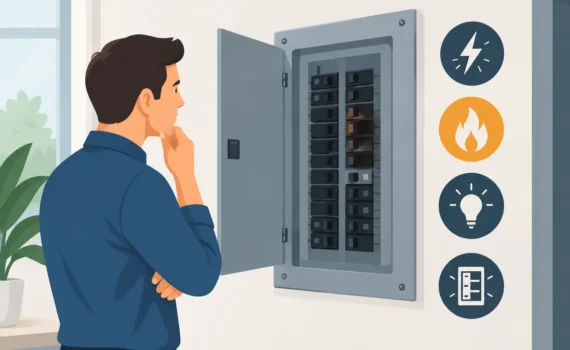
A breaker trips once after a hair dryer and space heater run on the same circuit. That can be a normal overload. But when breakers trip repeatedly, lights flicker, or the panel feels warm, homeowners often ask: do panels fail? Yes, electrical panels can fail, and the warning signs deserve prompt attention.
Your electrical panel is the distribution point for power throughout your home or business. It directs electricity to individual circuits and uses breakers to shut off power when a circuit is overloaded or develops a fault. When the panel, a breaker, or a connection inside the enclosure is damaged, worn out, improperly installed, or undersized for the property, the system may not operate as it should.
Do panels fail over time?
Electrical panels are built to last, but they are not maintenance-free or permanent. Age alone does not always mean a panel is unsafe. A well-installed panel in good condition can provide dependable service for many years. The concern is whether the panel can safely handle the building’s electrical demand and whether its components are still making secure, reliable connections.
Heat is one of the main reasons panel components deteriorate. Every time electricity moves through a breaker, wire, terminal, or bus bar, a small amount of heat is produced. Loose connections, overloaded circuits, corrosion, and damaged breakers create more resistance, which creates more heat. Over time, that heat can discolor components, weaken insulation, damage breakers, and affect the metal bus bars that distribute power inside the panel.
Houston-area heat and humidity can also contribute to electrical concerns, especially in garages, exterior equipment locations, older homes, or buildings with moisture intrusion. Water does not need to pour into a panel to cause trouble. Humidity, condensation, pest damage, and corrosion around service equipment can all affect electrical connections.
Signs an electrical panel may be failing
A failed panel does not always mean the whole box suddenly stops working. More often, the system gives warning signs that a trained electrician should inspect. Do not ignore changes simply because the power comes back after resetting a breaker.
Repeated breaker trips are one of the most common signs. A breaker that trips is doing its job by interrupting power during an overload or fault. However, if the same breaker trips under normal use, will not reset, or trips without an obvious cause, there may be a circuit issue, a failing breaker, or a problem within the panel.
Lights that dim, flicker, or brighten unexpectedly also deserve attention. A single flickering bulb may be a loose bulb or fixture issue. Flickering throughout several rooms, especially when appliances start, can point to a loose connection or capacity problem. Power that changes noticeably is not something to troubleshoot by trial and error.
Other warning signs include:
- A panel that feels unusually warm, makes buzzing or crackling sounds, or has a burning odor
- Rust, water staining, corrosion, melted plastic, scorch marks, or discoloration around breakers
- Breakers that are loose, hot, difficult to reset, or repeatedly fail to stay on
- Appliances or electronics that lose power unexpectedly, outlets that stop working, or frequent blown fuses in an older fuse-based system
- A panel that is overcrowded, has unlabeled circuits, or contains added circuits installed without adequate capacity
If you smell burning, see smoke, hear active arcing, or notice a panel that is hot to the touch, treat it as an urgent electrical issue. Keep people away from the panel, avoid touching it, and contact a qualified electrician. If there is an immediate fire risk, call emergency services first.
What causes panel problems?
Panel issues can come from inside the panel, from the circuits connected to it, or from changes in how the property uses electricity. Identifying the cause matters because replacing a breaker will not solve an overloaded service, and installing a bigger panel will not correct damaged wiring elsewhere in the building.
Overloaded electrical demand
Many older homes were designed before central air systems, home offices, large televisions, multiple refrigerators, EV chargers, and modern kitchen appliances became common. A 100-amp service may be adequate for some homes, while others need more capacity based on the home’s size and equipment. The right answer depends on a professional load calculation, not a guess based on the panel’s appearance.
Commercial properties face similar changes. A retail space may add display lighting, refrigeration, equipment, computers, or tenant improvements that push an existing panel beyond its practical capacity. Frequent tripping after a renovation is a reason to evaluate the circuits and panel rather than continually reset breakers.
Loose, damaged, or corroded connections
Electrical connections must be properly sized, tightened, and protected. A loose connection can generate dangerous heat without immediately shutting off power. Corrosion can interfere with a secure connection, particularly where moisture has entered equipment or where service components are exposed to harsh conditions.
Rodents and insects can also damage insulation or enter electrical equipment. During an inspection, an electrician can look for these concerns and determine whether repairs are limited to a breaker or connection, or whether the panel enclosure and related components need more extensive work.
Worn breakers and outdated equipment
Breakers are mechanical and electrical devices. They can wear out, become damaged by repeated overloads, or fail to trip correctly. Some older panel brands and equipment types also have known safety concerns. An electrician can identify the panel type, evaluate its condition, and explain whether repair, replacement, or an upgrade is the sensible option.
It is not safe to swap breakers between positions, install an unapproved breaker, or force a breaker that will not reset. Breakers must be compatible with the specific panel, and replacement work should be performed correctly to protect the circuit and panel.
Panel repair or panel upgrade: which one is needed?
Not every panel issue calls for a full replacement. If the panel is in good condition and has enough capacity, the repair may involve replacing a failed breaker, correcting a loose connection, repairing a damaged circuit, or adding a properly installed dedicated circuit.
A panel upgrade may make more sense when there is widespread corrosion or heat damage, insufficient capacity, no room for new circuits, outdated equipment, or major plans for the property. EV charger installation, electric range upgrades, pool equipment, additions, workshops, and generator transfer equipment can all require a review of available panel capacity.
For commercial properties, an upgrade may be part of a lighting retrofit, equipment installation, tenant build-out, or service expansion. The goal is not simply a larger box. It is a properly designed electrical system that supports the load, meets applicable code requirements, and leaves room for safe future changes.
What to do when you suspect a panel problem
Start with what you can safely observe. Note which breaker trips, what was running at the time, whether the issue affects one room or several, and whether you see visible damage. This information helps an electrician diagnose the issue efficiently.
Do not remove the panel cover, touch internal components, or keep resetting a breaker that immediately trips. The dead-front cover hides energized parts, and even a panel with some breakers off may still contain live service components. Avoid using extension cords as a long-term workaround for circuits that cannot handle normal demand.
A licensed electrician can inspect the panel, breakers, connections, grounding and bonding, circuit loading, and visible wiring condition. After the evaluation, you should receive a clear explanation of what was found, what repair is recommended, and whether the work is urgent or can be planned.
Get clear answers before a small problem grows
Electrical panel concerns are not a good place for assumptions. A breaker may be responding to a simple overload, or it may be warning you about a loose connection, failing equipment, or insufficient capacity. The difference requires a proper inspection.
For homeowners and businesses in Katy, Houston, Sugar Land, Cypress, Fulshear, Richmond, Rosenberg, Brookshire, and nearby communities, Beekman Electric provides experienced panel troubleshooting, repairs, upgrades, circuit breaker work, and free estimates. A prompt evaluation can help you make a safe, practical decision before an intermittent electrical issue becomes a larger repair.