



A light that flickers once may be a minor issue. A light that flickers every time the air conditioner starts, outlets that feel warm, or a breaker that will not stay on are different situations. An electrical troubleshooting service identifies the source of the problem before it becomes a bigger repair, a safety concern, or an interruption to your home or business.
Electrical problems are not always obvious. The visible symptom may be one bad outlet, but the cause could be a loose connection, an overloaded circuit, aging wiring, a failing breaker, water exposure, or a problem farther back in the electrical system. Finding the real cause takes proper testing, experience, and a careful approach.
Signs You Need Electrical Troubleshooting Service
Some electrical concerns need prompt attention, especially when there is heat, odor, smoke, or repeated power loss. Turn off power to the affected area if it is safe to do so, avoid using damaged equipment, and call a licensed electrician.
Common warning signs include breakers that trip repeatedly, outlets or switches that stop working, buzzing from a panel or fixture, lights that dim when major appliances turn on, and GFCI outlets that will not reset. You may also notice a burning smell, discoloration around an outlet, shocks or tingling when touching an appliance, or a circuit that suddenly cannot handle the same equipment it has always powered.
For homeowners, these issues often show up in kitchens, bathrooms, garages, attics, outdoor areas, and rooms with added electronics. A new appliance, space heater, window unit, EV charger, or remodeled room can place more demand on an existing circuit than it was designed to carry.
Commercial properties have a different set of pressures. A retail space may lose lighting in one section, an office may have unreliable outlets, or a parking lot light may fail after weather damage. Even when the problem appears small, unreliable electrical service can affect employees, customers, security, equipment, and daily operations.
What an Electrician Checks During Troubleshooting
Good troubleshooting is more than replacing the part that stopped working. The electrician starts by listening to what happened: when the issue began, what equipment was in use, whether the problem is constant or intermittent, and whether recent storms, construction, or electrical additions could be involved.
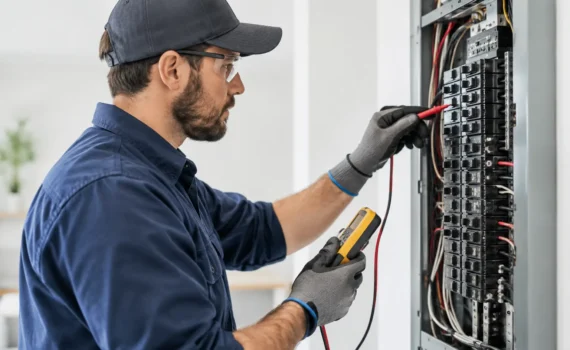
From there, testing may include checking voltage, connections, grounding, circuit load, breaker condition, GFCI protection, fixtures, switches, and the electrical panel. The exact scope depends on the symptom. A dead outlet may only require a repair at the outlet or a reset upstream. It may also point to a loose connection in another device on the same circuit, which is why guessing can lead to incomplete repairs.
Panel-related problems deserve special care. A breaker that trips is doing a job: it is shutting off power when it detects a potential overload, short circuit, or ground fault. Replacing a breaker without identifying why it tripped can leave the underlying issue in place. In some cases, the fix is a damaged device or overloaded circuit. In others, the circuit needs repair, separation, or an upgrade to support the load safely.
The goal is a clear diagnosis and a repair recommendation that makes sense for the property. You should know what was found, what needs to be corrected, and whether the work is urgent or can be planned as an upgrade.
Common Problems and the Right Fix
An outlet that does not work is not always a failed outlet. It could be controlled by a wall switch, protected by a tripped GFCI outlet, or connected to a circuit with a loose wire. Bathrooms, kitchens, garages, and exterior outlets commonly use GFCI protection, and one tripped device can affect several outlets farther along the circuit.
Flickering lights can come from a loose bulb or a failing fixture, but they can also signal a poor connection, dimmer compatibility issue, or circuit concern. LED upgrades are especially likely to reveal compatibility problems when older dimmers are left in place. The right repair depends on the fixture, switch, wiring condition, and load on that circuit.
A breaker that trips only when a specific appliance runs may indicate an overloaded circuit or a problem with the appliance itself. A breaker that trips with nothing plugged in may point to wiring damage, moisture, or a fault in a hardwired device. These are different diagnoses, so the repair should not be treated as one-size-fits-all.
Outdoor electrical issues frequently follow heavy rain, landscaping work, pest activity, or long-term exposure to heat and moisture. Damaged covers, failed weather-resistant outlets, compromised connections, and water intrusion should be addressed rather than ignored. Exterior lighting, cameras, pool-area equipment, and parking lot lighting all need equipment and wiring suited to the environment.
Why DIY Electrical Diagnosis Can Miss the Real Problem
Resetting a breaker or GFCI outlet is reasonable when you understand what caused it and the issue does not return. Repeated resets are not a repair. They can delay the discovery of an overloaded circuit, damaged wire, loose connection, or failing device.
Electrical work also has risks that are not visible from the outside. A receptacle can look normal while connections behind it are overheated. A panel can appear orderly while a breaker, bus connection, or circuit load needs professional attention. Working inside a panel or opening electrical boxes without the right training and tools creates unnecessary risk of shock, arc damage, and further property damage.
A licensed electrician can test the system under the conditions that trigger the problem and determine whether a repair, replacement, or circuit upgrade is appropriate. That approach is usually faster than changing parts one by one and hoping the symptom disappears.
Troubleshooting for Homes, Rentals, and Businesses
For a home, troubleshooting often protects the routines people depend on: reliable kitchen outlets, safe bedroom lighting, working smoke detectors, exterior security equipment, and enough power for modern appliances. It can also help plan upgrades such as ceiling fans, whole-home surge protection, generator inlet boxes, or EV charger installation. These additions may require dedicated circuits or panel capacity checks before installation.
Rental property owners benefit from prompt diagnosis because recurring outlet, lighting, or breaker complaints can quickly become a tenant-satisfaction and maintenance issue. A documented repair also gives owners a clearer picture of the property’s electrical condition.
For businesses, a quick response can limit downtime. A failed circuit may affect point-of-sale systems, workstations, refrigeration, signage, security equipment, or essential lighting. Commercial troubleshooting may involve panel capacity, damaged circuits, LED retrofit components, circuit breakers, or parking lot lighting. The priority is to make the repair safely while minimizing disruption to customers and operations.
What to Do Before the Electrician Arrives
You do not need to diagnose the issue yourself, but a few details can help speed up the visit. Notice which rooms or devices are affected, whether a breaker is off, what was running when the issue happened, and whether the problem followed a storm, renovation, or new equipment installation.
Do not keep using an outlet, switch, extension cord, or appliance that is hot, damaged, sparking, or giving off an odor. Avoid covering the problem with a larger breaker, repeated resets, or a power strip. If you see smoke, active sparking, or signs of fire, move to safety and contact emergency services.
For non-emergency concerns, schedule a professional evaluation while the details are still fresh. Beekman Electric provides free estimates and straightforward electrical service for homeowners and commercial properties throughout Katy and the West Houston area. A seasoned technician can identify the source of the issue, explain the repair in plain language, and keep the work area clean when the job is complete.
Electrical problems rarely improve through repeated resets or waiting for the next flicker. Addressing the first warning sign can protect your equipment, your property, and the people who rely on it every day.