



A warm outlet cover, a breaker that keeps tripping, or lights that flicker when an appliance starts may seem like small annoyances. They can also point to wiring fire risks that should not be ignored. Electrical problems often develop out of sight, behind walls, above ceilings, or inside panels, where heat can build long before there is visible damage.
The good news is that many electrical fires are preventable. Knowing what to watch for, avoiding temporary fixes, and bringing in a licensed electrician early can protect your home, business, equipment, and the people who use the property.
What creates wiring fire risks?
Electrical fires usually begin when wiring, connections, or electrical equipment generates more heat than it can safely handle. A circuit breaker is designed to interrupt power when it senses an unsafe overload or fault, but breakers are not a substitute for correctly sized wiring and secure connections.
Older properties can be more vulnerable because electrical systems were built for a different level of demand. A home that once powered a few lamps and a window unit may now support multiple TVs, computers, kitchen appliances, chargers, pool equipment, and HVAC systems. Adding those loads to undersized or aging circuits can create trouble.
Age is only one factor. Newer homes and commercial spaces can develop hazards after poor-quality repairs, unpermitted alterations, storm damage, rodent activity, water intrusion, or a loose connection inside an outlet, switch, junction box, or panel. A loose connection creates resistance. Resistance creates heat. Over time, that heat can damage insulation and surrounding materials.
Warning signs of wiring fire risks
A single flicker caused by a utility issue is not always an emergency. Repeated symptoms, however, deserve professional attention. Watch for these warning signs, especially when they occur near the same outlet, room, appliance, or circuit:
- Breakers that trip repeatedly or fuses that blow more than once
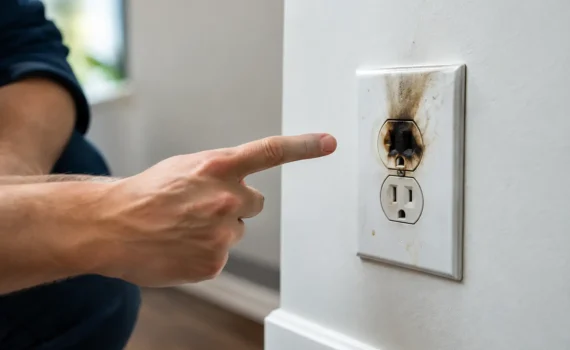
- Outlets, switches, plugs, or electrical panels that feel warm, look discolored, or smell burnt
- Buzzing, crackling, popping, or sizzling sounds from electrical components
- Lights that dim or flicker when a large appliance, HVAC system, or tool turns on
- Sparks when plugging in a device or a plug that fits loosely in an outlet
- Shocks or tingling when touching an appliance, switch, fixture, or metal cover plate
- Extension cords and power strips used as permanent solutions
Do not keep resetting a breaker to make the problem disappear. A breaker that trips is giving you useful information: the circuit may be overloaded, a device may be failing, or there may be a short circuit or ground fault. Resetting it once after unplugging equipment can help identify whether an overloaded circuit is involved. If it trips again, leave it off and schedule service.
If you see smoke, flames, active sparking, or hear intense arcing, move people away from the area and call 911. Do not use water on an electrical fire. If it can be done without approaching danger, turn off power at the main breaker. Safety comes before troubleshooting.
The hidden problems behind outlets and panels
Some of the most serious wiring issues are not visible from the room. Connections inside an outlet box can loosen after years of heating and cooling. Damaged wire insulation may be hidden in an attic, wall cavity, or crawlspace. Rodents can chew wiring, and moisture from a roof leak, plumbing leak, or exterior opening can affect electrical connections.
Attics need particular attention in the Houston area. High temperatures place extra strain on electrical equipment, and attic spaces may contain recessed lighting, junction boxes, fan wiring, HVAC equipment, or damaged cables that are difficult to inspect from below. Insulation should not bury unsafe connections or cover fixtures that are not rated for insulation contact.
Electrical panels also need room to work safely. Corrosion, damaged breakers, double-tapped wiring, overcrowding, loose lugs, and outdated components can all lead to overheating. A panel upgrade is not automatically necessary every time a breaker trips, but it may be the right solution when a property no longer has adequate capacity for its electrical load or the existing equipment has safety concerns.
Why overloaded circuits are not a minor inconvenience
Overloading happens when too many devices draw power from one circuit. Kitchen countertop circuits, garages, home offices, workshops, and retail back rooms are common trouble spots. Space heaters, portable air conditioners, microwaves, coffee makers, hair tools, power tools, and holiday lighting can add up quickly.
Power strips do not increase a circuit’s capacity. They simply allow more devices to connect in one place. A quality surge protector can protect certain electronics from voltage spikes, but it does not correct an overloaded circuit, a damaged outlet, or poor wiring.
The proper fix depends on the use of the space. A homeowner may need a dedicated circuit for a refrigerator, microwave, garage equipment, or EV charger. A business may need additional circuits for point-of-sale equipment, display lighting, refrigeration, computers, or break-room appliances. A licensed electrician can evaluate the actual load rather than guessing based on what happens to be plugged in that day.
DIY repairs can make the danger worse
Replacing a faceplate or changing a light bulb is one thing. Opening an outlet, panel, or junction box without the right knowledge is another. Electrical work involves more than matching wire colors. Wire size, circuit protection, grounding, box fill, connection methods, GFCI and AFCI protection, and local code requirements all matter.
One common mistake is replacing a repeatedly tripping breaker with a larger breaker. That can allow more current to flow through wiring that was not designed to carry it. Another is using an extension cord through a wall, under a rug, or across a doorway. Cords can be damaged by foot traffic, furniture, heat, and pinching, creating a fire risk where no one can easily see it.
Temporary repairs also tend to become permanent. If an outlet is loose, discolored, or unreliable, stop using it and have it repaired. If a light fixture flickers, do not assume the bulb is always the issue. A failing connection can be the cause.
How a professional electrical inspection helps
A qualified electrician starts by listening to the symptoms: which breaker trips, when lights flicker, what equipment is running, and whether the issue is isolated or affecting several areas. From there, the technician can inspect outlets, switches, connections, breakers, grounding, panel condition, and circuit loading.
The right repair may be straightforward, such as replacing a worn outlet, tightening a loose connection, repairing damaged wiring, or installing a correctly rated breaker. Other situations call for a new dedicated circuit, a panel repair, updated safety protection, or an electrical service upgrade. The goal is not to sell the largest project. It is to identify the condition that is creating heat, faults, or unreliable power and correct it safely.
For rental properties and commercial buildings, prompt inspection can also reduce downtime and limit liability. A dark parking lot light, a failing exit light circuit, or a breaker problem in a tenant space may affect more than convenience. It can affect daily operations and occupant safety.
Simple habits that reduce electrical fire hazards
Good electrical safety does not require constant worry. It does require paying attention when a system behaves differently. Avoid overloading power strips, replace damaged cords, keep flammable materials away from heat-producing appliances, and use outdoor-rated equipment where it belongs. Test smoke alarms regularly and replace units according to the manufacturer’s recommended service life.
When planning improvements, build electrical capacity into the project. A new appliance, remodeled kitchen, workshop, generator connection, outdoor camera system, or EV charger may need dedicated wiring and proper circuit protection. Planning it correctly from the beginning is safer and usually less disruptive than correcting overloaded circuits later.
If you are seeing repeated breaker trips, warm outlets, flickering lights, or any burning smell, do not wait for the problem to become obvious. Beekman Electric provides free estimates and practical, code-conscious electrical service for homeowners and businesses across Katy and West Houston. A timely service call can turn an uncertain electrical symptom into a clear repair plan and a safer property.