



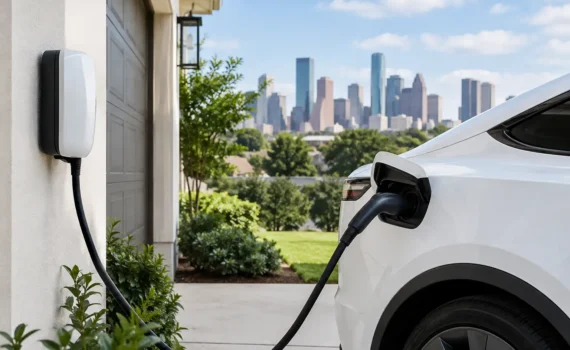
A new electric vehicle changes one part of your daily routine: where it charges overnight. Reliable EV charging at home means your vehicle is ready when you are, without relying on public stations or running a questionable extension cord across the garage. The key is not simply mounting a charger on the wall. It is making sure your home electrical system can safely support it.
For many Katy and Houston-area homeowners, a professionally installed charging circuit is a practical upgrade that adds everyday convenience and can make the home more appealing to future buyers. The right setup depends on your vehicle, driving habits, electrical panel capacity, parking arrangement, and the equipment you choose.
Understanding EV Charging at Home
Most vehicles come with a portable charging cord that plugs into a standard 120-volt outlet. This is commonly called Level 1 charging. It can be useful for drivers with short daily commutes, plug-in hybrids, or a vehicle that sits at home for long periods. But it adds miles gradually, and a standard garage outlet may not be in the best condition for the continuous load of regular vehicle charging.
Level 2 charging uses a dedicated 240-volt circuit, similar in concept to the circuit used for an electric range or dryer. It can provide substantially faster charging and is the preferred option for many fully electric vehicle owners. Depending on the vehicle and charger, an overnight charge can often restore the driving range used during a normal day.
The best choice is not always the highest-amperage charger. A driver who travels 25 miles a day has different needs than a household with two EVs, a long commute, or irregular work hours. Choosing a charger that fits the home and the driving schedule can prevent unnecessary electrical upgrades while still delivering dependable charging.
Why a Dedicated Circuit Matters
An EV charger is not like plugging in a phone for an hour. It can draw power for several hours at a time, often night after night. That sustained demand is why charging equipment should be installed on a properly sized dedicated circuit with the correct wiring, breaker, connections, and protective equipment.
Using a shared outlet, worn receptacle, undersized wiring, or extension cord can create heat at connection points and raise the risk of equipment damage or electrical failure. A charger may appear to work normally until a connection begins overheating. That is not a shortcut worth taking.
A licensed electrician can determine whether your existing panel has enough available capacity for the charger. This evaluation considers the home’s current electrical demand, including air conditioning, electric cooking, dryers, water heaters, pool equipment, and other major loads. In Houston-area homes, air conditioning is a significant part of that calculation, especially during the hottest months.
If the panel has adequate capacity, the work may involve adding a new breaker, running the proper cable, and installing either a hardwired charger or a suitable receptacle. If the panel is full or does not have sufficient capacity, the project may call for a panel upgrade, subpanel, load-management solution, or a charger with a lower output setting. Each option has trade-offs in cost, charging speed, and future flexibility.
Hardwired Chargers vs. Plug-In Chargers
Many Level 2 chargers can be hardwired directly into the electrical system or connected through a dedicated 240-volt receptacle. Both can be appropriate when correctly designed and installed, but they are not identical.
A hardwired charger has fewer connection points and is often a strong option for a permanent installation. It can also support higher charging output when the vehicle and electrical system allow it. A plug-in charger makes it easier to replace or take the equipment with you, but the receptacle must be rated and installed for the job. Not every outlet that looks similar is suitable for repeated high-load charging.
Tesla Wall Connectors, universal chargers, and vehicle-specific equipment also have different features. Some offer scheduling, power sharing for multiple vehicles, usage tracking, or adjustable charging limits. Those features are useful, but they should come after the electrical basics: a safe circuit, correct installation, and equipment listed for its intended use.
Choosing the Right Charger Location
The best charger location is usually closer than homeowners first expect. Think about where the charge port sits on your vehicle, where you normally park, and how the cable will reach without crossing a walking path or driveway. A cord should not be stretched tight, pinched by a garage door, or left where someone can trip over it.
Garage installations are common, but a charger can also be installed outdoors when the equipment and installation method are rated for exterior conditions. Weather protection, mounting height, cable management, and physical protection from vehicles all matter. A charger near a driveway may need a more deliberate plan than one mounted inside a garage wall.
It is also worth thinking ahead. If your household may add a second EV, move a vehicle to the other side of the garage, or build an outdoor parking area, planning for future conduit or capacity now can be less disruptive than reopening finished walls later.
Before an installation, have these details ready for your electrician:
- Your vehicle make, model, and charging connector type
- The charger you plan to use, or whether you want help selecting one
- A photo or clear description of your electrical panel
- Where the vehicle parks and the distance to the proposed charger location
- Whether you expect a second EV or other major electrical upgrades soon
These details help produce a more accurate estimate and reduce surprises on installation day.
Permits, Code Requirements, and Safe Installation
Electrical work for EV charging should meet applicable local code requirements and permitting rules. Requirements can vary by jurisdiction, which is one reason local electrical experience matters. The permit process is not just paperwork. It helps verify that the circuit, breaker, wiring method, grounding, and installation details are appropriate for a high-demand appliance.
A proper installation also means keeping the work area clean and minimizing disruption. In some homes, the circuit can be routed through the garage, attic, exterior wall, or crawlspace. The route affects labor, materials, appearance, and the final price. An honest estimate should account for those conditions rather than offering a one-size-fits-all number that changes after work begins.
Older homes can require additional attention. A panel may have limited space, outdated equipment, aluminum branch wiring, signs of corrosion, or prior work that needs correction. None of those issues automatically prevents home charging, but they can change the safest path forward.
What Affects EV Charging Installation Cost?
The charger itself is only one part of the project. Installation pricing typically depends on the circuit size, cable length, wall access, panel condition, charger type, permit requirements, and whether a panel upgrade is needed. A straightforward garage installation with an available panel space will usually be simpler than a long outdoor run from a crowded panel.
Be cautious with estimates that focus only on a low starting price. Ask what is included: the breaker, wire, receptacle or hardwired connection, mounting, permit handling if needed, and any repairs to wall surfaces. Clear scope and straightforward communication make it easier to compare quotes fairly.
For commercial properties, the planning is broader. A workplace, retail center, apartment community, or fleet location may need multiple chargers, dedicated distribution equipment, parking-layout coordination, access control, and a plan for managing demand as more drivers plug in. Starting with electrical capacity and future growth is usually more cost-effective than installing chargers one at a time with no overall plan.
A Practical Way to Get Started
First, decide what charging speed fits your actual driving needs. Next, identify where the vehicle parks and where the electrical panel is located. Then have a licensed electrician evaluate the panel and recommend a circuit size and installation method that meet code and work with your chosen equipment.
Beekman Electric provides FREE estimates for residential and commercial EV charger installations across the Katy and West Houston area. An on-site evaluation can identify whether your project is a straightforward dedicated circuit or whether it makes sense to address panel capacity at the same time.
A well-planned charger should feel simple after installation: pull in, plug in, and start the next day with the range you need. Give a qualified local electrician the details of your vehicle and home, and you can make that routine safe from the start.