



A breaker that trips once may be a nuisance. A breaker that trips repeatedly, an outlet that feels warm, or lights that dim when equipment starts can be a warning that your electrical system needs attention. Electrical safety upgrades are not just for older homes or major remodels. They help homeowners and business owners reduce fire, shock, and equipment-damage risks before a small problem becomes an expensive interruption.
For properties across Katy and West Houston, the right upgrade depends on the building’s age, electrical demand, and how the space is used. A family adding an EV charger has different needs than a retail shop replacing aging lighting. A licensed electrician can identify the cause of a concern and recommend work that makes sense for the property, rather than selling a one-size-fits-all package.
Electrical Safety Upgrades Worth Considering
Some electrical work is primarily about convenience, such as adding a switch where one is missing. Other work directly improves the way your electrical system responds to faults, moisture, surges, and heavy demand. These are often the upgrades that provide the most practical protection.
Modernize an overloaded or outdated electrical panel
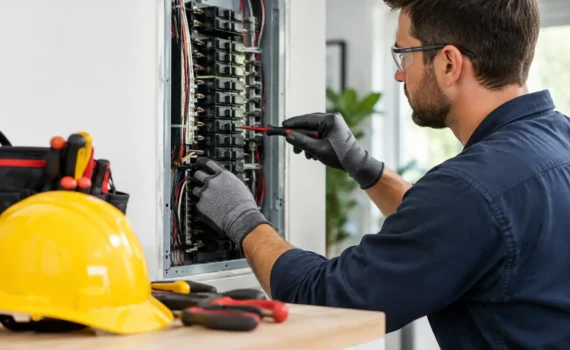
Your electrical panel distributes power to every circuit in the building. If it is outdated, crowded, corroded, or frequently tripping breakers, it may not be equipped for the way the property is used now. Modern homes commonly run multiple televisions, computers, kitchen appliances, HVAC equipment, pool equipment, and charging devices at the same time. Commercial spaces may add LED lighting, office equipment, refrigeration, or specialized machinery over time.
A panel upgrade can provide the capacity for new dedicated circuits while improving organization and reliability. It is not automatically necessary because a panel is old, however. Some older panels remain serviceable, while others have known safety concerns or show clear signs of deterioration. An electrician should inspect the equipment, load demands, breaker condition, grounding, and wiring before recommending replacement.
Do not ignore a panel that is hot to the touch, makes buzzing sounds, smells burnt, shows rust or water damage, or trips without an obvious reason. Those conditions deserve prompt professional attention.
Replace damaged outlets and add GFCI protection
Loose outlets, cracked faceplates, scorch marks, plugs that fall out, and switches that spark are repair issues, not cosmetic issues. Damaged devices can create poor connections that generate heat. Replacing worn outlets and switches is often a straightforward repair, but it should be done correctly so the wiring connections, box condition, and grounding are checked at the same time.
Ground-fault circuit interrupter, or GFCI, protection is especially valuable anywhere electricity and water may meet. Kitchens, bathrooms, garages, laundry areas, exterior receptacles, and many commercial utility areas commonly require this protection. A GFCI reacts quickly when it detects an unintended path for electrical current, helping reduce the chance of serious shock.
Testing existing GFCI outlets periodically is a good habit. If a test button will not trip or reset the outlet, or if an outlet repeatedly trips under normal use, have it inspected rather than bypassing the problem.
Add AFCI protection where appropriate
Arc-fault circuit interrupter, or AFCI, protection is designed to detect dangerous arcing conditions that ordinary breakers may not catch. Arcing can occur when a wire is damaged, a connection is loose, or a cord is pinched behind furniture. It can produce heat inside walls or at connections before there is any visible sign of trouble.
AFCI requirements vary by location and project scope, so this is not a universal retrofit for every circuit in every building. Still, it is a worthwhile conversation during panel work, remodeling, or when addressing recurring breaker issues. The goal is not to add devices without a reason. The goal is to use the right protective equipment where it can reduce a real risk.
Install whole-home surge protection
Power surges are not limited to lightning strikes. Smaller surges can happen when utility power is restored, large appliances cycle, or nearby electrical equipment switches on and off. Over time, those disturbances can shorten the life of televisions, computers, smart appliances, security cameras, HVAC controls, and other sensitive electronics.
A whole-home surge protector is installed at or near the electrical panel and helps protect the electrical system as a whole. It works best as part of a layered approach. Point-of-use surge strips can still be useful for sensitive electronics, but they should not be the only protection in a home or business with valuable connected equipment.
Surge protection is particularly sensible after a panel upgrade, when installing an EV charger, or when adding smart-home and security devices. It is a modest upgrade compared with replacing multiple damaged electronic components after a power event.
Improve smoke and carbon monoxide detection
Smoke detectors are one of the most direct life-safety upgrades available. Yet many properties still have old detectors, missing units, disconnected hardwired alarms, or batteries that are only replaced after the chirping starts. Interconnected alarms are especially helpful because when one alarm detects smoke, all connected alarms sound throughout the property.
Detector placement, power source, age, and local requirements all matter. In a home, sleeping areas and paths of travel are key locations. In a commercial property, the right approach depends on occupancy, layout, and applicable fire-safety requirements. An electrician can replace hardwired units, correct wiring issues, and help ensure new devices are properly interconnected where appropriate.
Carbon monoxide alarms are also important where fuel-burning appliances, fireplaces, attached garages, or generators are present. Electrical upgrades cannot replace fire-safety planning, but dependable detection gives occupants valuable time to respond.
Electrical Safety Upgrades for Outdoor Areas
Outdoor electrical equipment faces rain, humidity, heat, landscaping activity, and physical wear. In the Houston area, weather exposure makes proper installation and maintenance especially important.
Weather-resistant outlets with secure covers help protect exterior receptacles from moisture. Properly installed landscape lighting, outdoor security cameras, and parking lot lighting can improve visibility without relying on extension cords or temporary connections. A damaged outdoor outlet or loose fixture should be repaired promptly, particularly if water can enter the box or wiring.
For business owners, parking lot lighting is more than an appearance issue. Failed fixtures and dark walkways can affect customer comfort, employee safety, and site visibility. LED retrofits can reduce maintenance demands and improve light quality, but the existing circuits, poles, controls, and photocells should be evaluated as part of the project.
Plan for Higher Electrical Demand Safely
Adding major equipment without evaluating the electrical system is a common way to create avoidable problems. EV chargers, hot tubs, electric ranges, workshop tools, pool equipment, and commercial machinery often need dedicated circuits. A dedicated circuit helps prevent overloads and ensures the equipment receives the power it requires.
EV charging is a good example. A charger may seem like a simple addition, but the correct installation depends on the electrical panel capacity, charger rating, wiring route, breaker size, and local code requirements. The same principle applies to generator inlet boxes and transfer-switch-related work. A generator connection must be designed to prevent dangerous backfeeding into utility lines and to allow selected circuits to be powered safely.
Extension cords are not a substitute for permanent wiring. They are useful for temporary tasks, but running them under rugs, through walls, across walkways, or as a long-term answer to too few outlets creates unnecessary risk.
When to Call an Electrician Right Away
Some signs should move a safety upgrade from the future-project list to a prompt service call. Contact a licensed electrician if you notice burning odors, sparks, smoke, buzzing from a panel or outlet, repeated breaker trips, shocks or tingling from appliances, discoloration around outlets, or water near electrical equipment.
If a breaker trips, avoid repeatedly resetting it until it stays on. That breaker may be responding to an overloaded circuit, a faulty appliance, damaged wiring, or a short circuit. Turning it back on again and again can make the underlying issue worse.
For a planned upgrade, start with a clear description of what is happening and what you want to add. Photos, the age of the building, and a list of new equipment can help an electrician provide a more accurate estimate. Ask what work is necessary now, what can be planned later, and whether the quoted solution includes permits or inspections when required.
A safe electrical system is built through practical decisions made before trouble starts. Whether you need a panel evaluation, safer outlets, surge protection, updated alarms, or power for new equipment, Beekman Electric can provide a clear assessment and a free estimate so you can move forward with confidence.