



A summer thunderstorm rolls through, the lights flicker for a second, and your TV, Wi-Fi equipment, refrigerator, and HVAC system all keep running. That is when many property owners ask: do surge protectors prevent damage? They can, but only when the protection is properly selected, installed, and used as one part of a sound electrical system.
A surge protector is not a guarantee that every electronic device will survive every electrical event. It is a practical line of defense against common voltage spikes that can slowly wear down sensitive equipment or cause an immediate failure. For homes and businesses in the Houston area, where thunderstorms and utility interruptions are familiar, that protection can be a worthwhile electrical upgrade.
Do Surge Protectors Prevent Damage From Power Surges?
Yes, surge protectors can prevent or reduce damage caused by many power surges. A surge is a brief rise in voltage above the level your electrical system and connected equipment are designed to handle. It may last only a fraction of a second, but that can be enough to damage circuit boards, motors, chargers, appliances, smart devices, and networking equipment.
The job of a surge protective device is to redirect excess voltage safely toward the electrical grounding system before it reaches your equipment. The device does not make the surge disappear. Instead, it limits the voltage that continues through the circuit. This is why proper grounding, correct installation, and a quality device matter just as much as the label on the package.
Some surges are dramatic, such as those associated with nearby lightning activity or a utility issue. Many are smaller and happen inside the building. Air conditioners, refrigerators, pumps, power tools, elevators, and other motor-driven equipment can create switching surges as they cycle on and off. Those repeated smaller events may not cause a visible failure right away, but they can shorten the useful life of electronics over time.
What a Surge Protector Can and Cannot Do
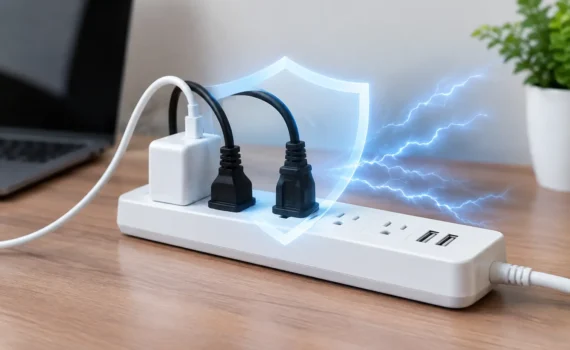
A plug-in surge protector can help protect devices connected directly to it, including televisions, computers, gaming systems, printers, and modem or router equipment. It is useful protection, especially for expensive or hard-to-replace electronics. But a basic power strip is not automatically a surge protector. Look for clear surge-protection ratings and an indicator light showing that the protective components are still active.
Whole-home surge protection works at the electrical panel. It is designed to reduce incoming surges before they spread through the home’s branch circuits. This helps protect equipment that cannot plug into a power strip, such as a refrigerator, dishwasher, built-in microwave, garage door opener, HVAC equipment, and many hardwired smart-home devices.
Neither option protects against every problem. A surge protector does not keep the power on during an outage. It does not correct low voltage, loose wiring, overloaded circuits, or a failing electrical panel. It also cannot promise protection from a direct lightning strike to a building or power line. Direct strikes involve an enormous amount of energy, and damage can still occur even with quality protection in place.
That does not mean surge protection is ineffective. It means expectations should be realistic. Think of it like a seat belt: it provides meaningful protection in many situations, but it cannot eliminate every risk.
Why Layered Protection Works Better
For most homes, the strongest approach is layered protection. A properly installed whole-home surge protector handles many surges at the service panel, while point-of-use surge protectors add another level of defense for sensitive electronics. The two work together rather than replacing each other.
This approach is especially practical for equipment that contains delicate circuit boards. Modern appliances are more efficient and feature-rich than older models, but they also rely heavily on electronic controls. A refrigerator, oven, washing machine, HVAC system, and garage door opener may all include boards that are costly to diagnose and replace.
Businesses can benefit from the same strategy. Point-of-sale systems, computers, security cameras, internet equipment, LED lighting controls, and commercial appliances all depend on stable power. A panel-mounted protective device can support the wider electrical system, while plug-in protection can be used where equipment is especially sensitive or critical to daily operations.
Signs Your Property May Need Better Surge Protection
Surge protection is worth considering before damage happens, not only after an expensive repair. Frequent storms, flickering lights during weather events, repeated breaker trips, and recently installed electronics are all reasons to evaluate the electrical system.
You may also want an electrician to assess protection if you are upgrading an electrical panel, installing an EV charger, adding a generator inlet box or transfer switch, replacing HVAC equipment, or renovating a kitchen or office. These projects often increase the amount and value of equipment connected to the electrical system. Adding surge protection during related electrical work can be an efficient choice.
If lights flicker regularly, outlets feel warm, breakers trip often, or appliances behave unpredictably, do not assume a surge protector will solve the problem. Those symptoms can point to loose connections, overloaded circuits, voltage issues, or other electrical conditions that need professional troubleshooting.
Choosing the Right Whole-Home Surge Protector
A whole-home surge protector should be matched to the panel and installed according to the manufacturer’s instructions and applicable electrical code. It is not simply an accessory to add without evaluating the existing electrical equipment.
An electrician will consider the panel type, available breaker space, service configuration, grounding and bonding, and the location of the device within the system. In general, a shorter, properly routed connection between the protective device and the panel helps it respond more effectively. The unit should also have an appropriate surge-current rating and a status indicator so its condition can be checked later.
Price matters, but the least expensive device is not always the best value. A low-cost unit may offer limited protection, fewer features, or a shorter expected service life. At the same time, the most expensive option is not automatically necessary for every property. The right recommendation depends on the building, the panel, the equipment being protected, and the level of risk.
Do Surge Protectors Wear Out?
Yes. Surge protectors sacrifice internal components when they divert excess voltage. After enough surge activity, those components can degrade and eventually stop providing the same level of protection. That is why a device with a functioning status light is valuable, although an indicator light does not replace routine attention.
For plug-in units, replace the protector if its protection indicator is off, it has been exposed to a known major surge, it is damaged, or it is old enough that the manufacturer recommends replacement. Do not keep using a power strip with cracked housing, discoloration, loose outlets, heat damage, or a damaged cord.
Whole-home devices should also be checked periodically, particularly after severe storms or utility events. If the status light shows a fault or the device indicates that protection has been lost, schedule service. An electrical professional can confirm whether the device, panel connection, grounding, or another part of the system needs attention.
A Smart Step Before the Next Storm
Surge protection is most effective when it is part of an electrical system that is in good condition. That includes a properly functioning panel, secure connections, correctly grounded outlets, and circuits sized for the loads they serve. No single device can make up for neglected electrical repairs.
For homeowners and businesses in Katy and West Houston, a whole-home surge protection evaluation can be a practical way to protect the equipment you already rely on every day. Beekman Electric can inspect the panel, explain the options in plain language, and provide a free estimate for a properly installed solution. A short appointment now may help prevent a much more disruptive repair later.